
Reflections
Whenever I travel to Minnesota, I spend a lot of time catching up with people. I lived in Minnesota for almost 45 years after being adopted to the state and had built a strong community both personally and professionally. So when planning this trip I was delighted to learn a former boss (and mentor and friend) was also going to be in town. Mary retired out of the country a year before I left to work in Washington state. Although we kept in touch through social media and the occasional email, she was timing her annual visit to MN to attend a celebration of the recent legislation allowing adoptees to access their original birth certificate.
Mary introduced me to the Minnesota Coalition on Adoption Reform organization around the time I started my MSW program in 2005. One of my other mentors, Professor Robert O’Connor, was also active in MCAR and the two of them basically introduced me to adoptee advocacy. I ended up working for Mary, at a non-profit providing information and resources for the adoption community. Although the work of MCAR wouldn’t help me, as a Korean adoptee, I felt it was important to support this work on behalf of all the adoptees born in Minnesota. This legislation would not benefit Mary or Robert either as they too had been born in other states. And that’s partly what I learned from them. These two mentors modeled the importance of advocating for the broader good even if it wasn’t going to benefit me personally. Their mentorship supported me throughout my time in Minnesota and helped me become the person I am today. When I think about the privilege of being able to be at the table at a listening session with the White House Initiative on Asian American Native Hawaiian Pacific Islander (WHIAANAPI) and talking to the commission members, I owe my seat to folks like Mary who gave me a chance, nurtured and supported my curiosity, and urged me to continue pursuing answers to my questions.
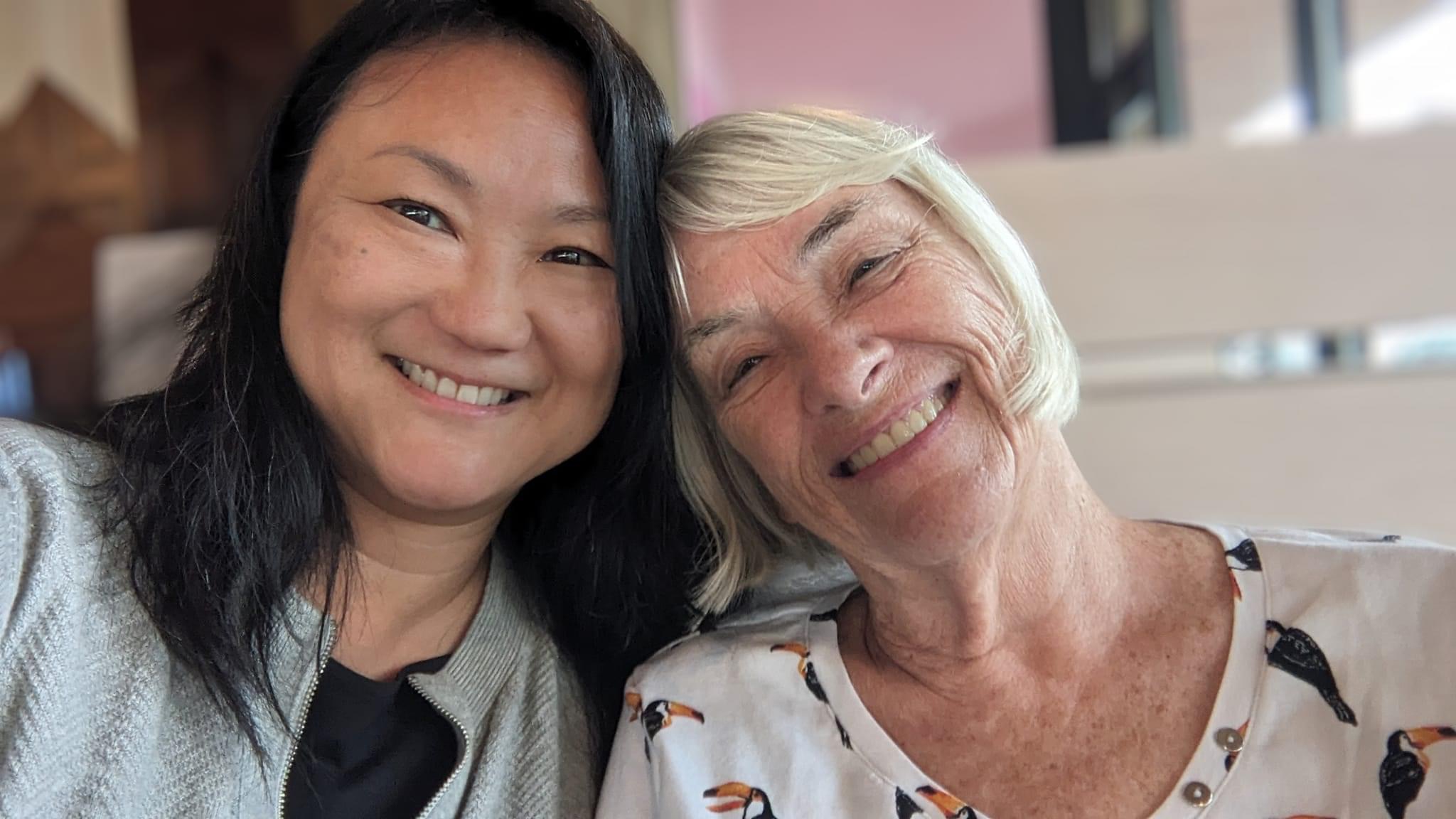
Although Mary “retired” from adoption work when she retired to Costa Rica, she remains connected in ways only an adoptee ever can – after all, we can’t ever retire from our lived experiences though I also welcome the day when adoption isn’t my 9-5 work.
It was lovely to reconnect in person this week after nearly 20 years of being in community with Mary. She is an OG of adoptee activists. When I think about all the work Mary and other adoptees of her generation have done – the books they wrote, the organizations they founded, the education and training and political work – all done pre-internet – I am in awe. Their generosity has been an inspiration to me to pay it forward.
Sometimes I get discouraged by social media’s lure of quick fame and influencers, which permeates the adoptee sphere as well, especially after Covid hit the world. Connecting “offline” is hugely important. More and more, I appreciate the opportunities for in-person re/connections.
Recommendations
I realized a while ago folks who are doing a great job of bringing news articles to the adoptee community faster than I can so I’ve decided it’s not the best fit for me to try to highlight newsworthy articles. My top recommendation is to follow @decsmith50 on Instagram for news updates related to adoption.
For this lab note, I’m highlighting three articles pointing to the harms committed to adoptees as a tool of violence during political conflict. For those who are not aware, taking children by force through kidnapping and trafficking is a common technique used during political conflicts as a way to harm those who are members of, or support, an opposing party or regime. A few examples:
- In El Salvador and Guatemala: Narrating the Distance of Transnational Adoption
- In Chile: Stolen at birth, an adoptee sues Chile over thousands of similar dictatorship-era crimes.
- In Argentina: Adopted by their parents’ enemies: tracing the stolen children of Argentina’s ‘dirty war’
I was in graduate school when I learned about this phenomenon. I attended a lecture by a woman who worked for Pro-Búsqueda, an organization in El Salvador, who search for children “disappeared” during their civil war. Many of the children who were not murdered were placed for adoption with pro-government families and others were sent to the United States. In this lecture we also watched the film Children of Memory (trailer below).
Another organization working to find out what happened to disappeared children is Asociación Civil Abuelas de Plaza de Mayo (Grandmothers of Plaza de Mayo) in Argentina.
I am always surprised how easily people are duped into believing there are massive numbers of children who are available for adoption when a country is in crisis and that the priority should be expedited adoption over thoughtful and exhaustive search for the child’s family. For the most part, I believe the majority of prospective adoptive parents embrace a naive optimism that adoption agencies have done their due diligence in ensuring these children are not stolen or trafficked.
I am less generous in believing adoption agencies are doing their work; I think it’s safe to say most agencies are also eager to believe what they’ve been told and intentionally look away because of their own misguided beliefs and the opportunity to increase their supply for eager adoptive parents. I also believe a good number of agencies are actively involved in the deceptions. Either way, agencies are profiting off of the exploitation of chaos and instability in a country or community. Even if a child was truly orphaned (both parents deceased), I’m not convinced agencies are actively worked to first locate relatives or other adults known to the child. There’s no money in reunification.
Before attending the Pro-Búsqueda lecture and film, I was really only tangentially aware of tactic of using adoption as a form of political harm during civil conflicts. Learning about this history and use of adoption helped me to step back and really look at the broader violence disguised by adoption around the world. Lest we think this is a vestige of the past, the act of disappearing children as an act of war is happening today.


Disappeared Children and Coercive Adoptions in Guatemala
 Harlow's Monkey