
Reflection
I’ve returned from my month of travel and conferences and have started processing all of the information from the White House Initiative on Asian American Native Hawaiian Pacific Islander commission listening session, the International Conference on Adoption Research conference, and the BIPOC Adoptees conference. So much has happened in the past month that it feels like it’s been much longer. Now that I’m finally back without any immediate travel plans, I thought I’d take some time to offer a few reflections on these events.
I’m going to focus this post on the WHIAANHPI and the ICAR Conference and my overall takeaways.
The White House Initiative on Asian American Native Hawaiian Pacific Islander listening session
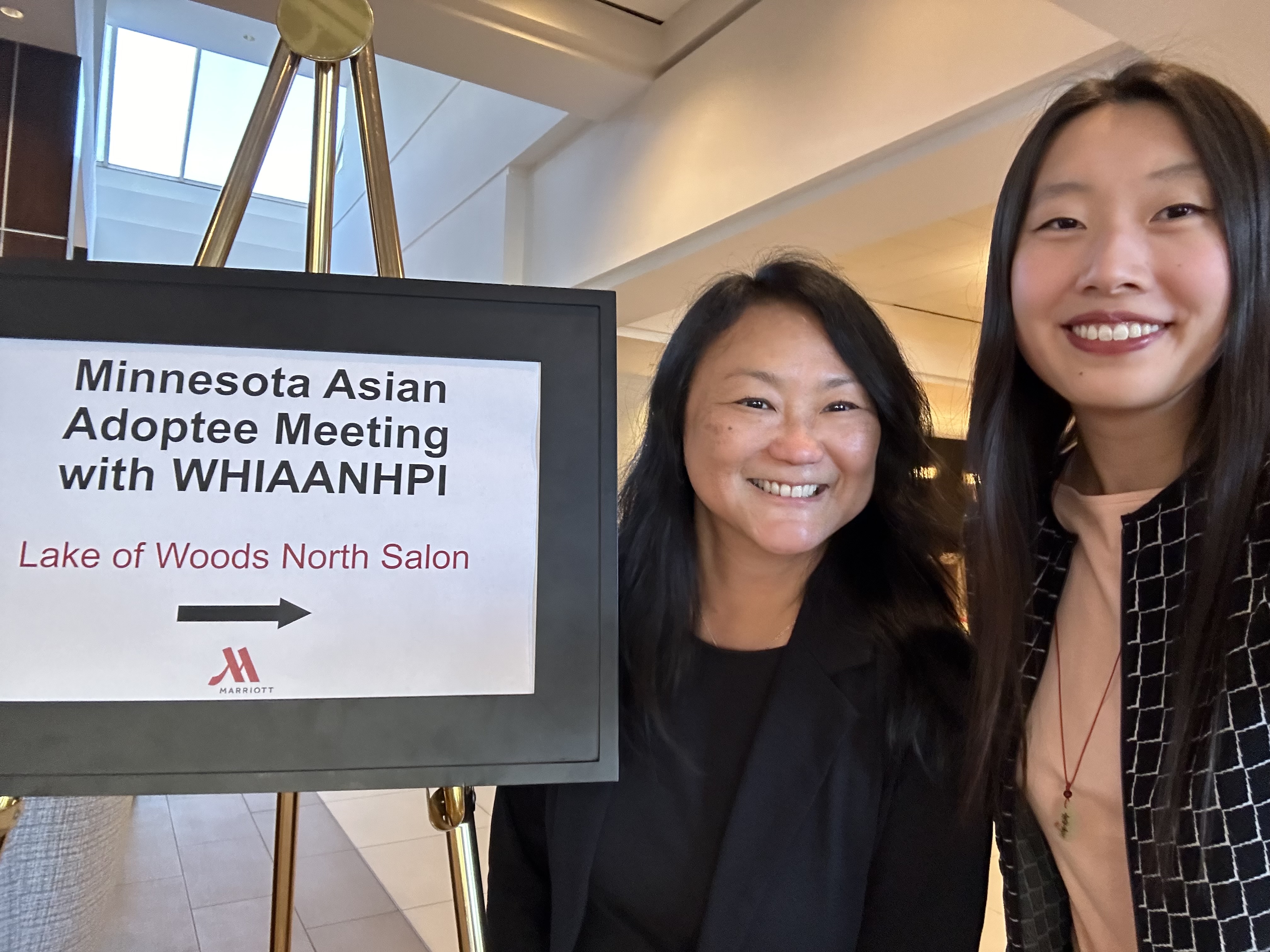
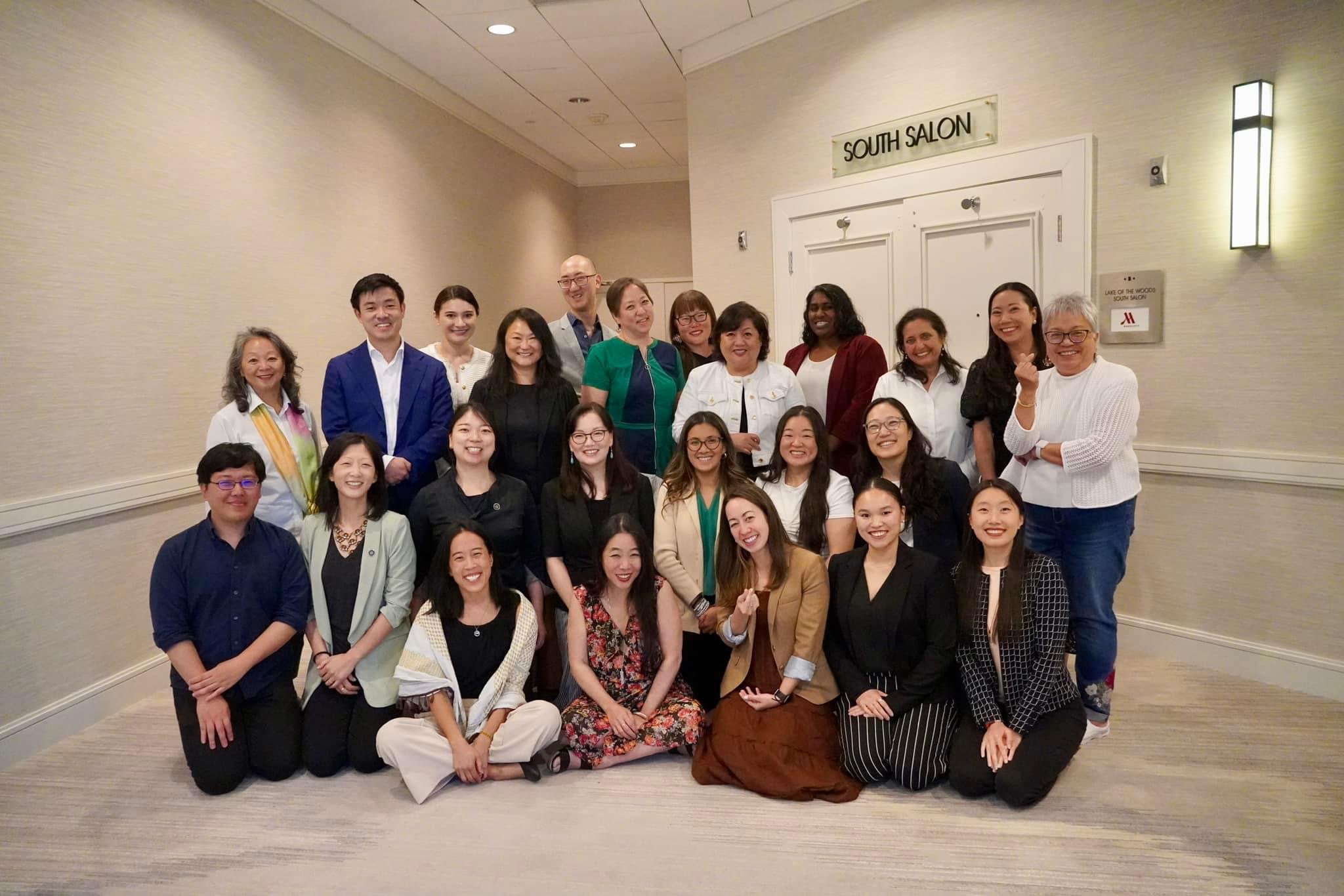
I was incredibly honored to be asked to speak at a listening session with the White House Initiative on Asian America Native Hawaiian Pacific Islander commission members and staff on June 30th in Minnesota. The commissioners were in town for other listening sessions and meetings with the AANHPI community in Minnesota. When I talk about the power of adoptees being at the table, this is a great example of what I mean. Commissioner Mia Ives-Rublee, a fellow Asian Korean transnational adoptee, originally initiated this listening session. If you don’t know Mia, please follow her immediately. Mia is a disability activist and leader and is the current Director of the Disability Justice Initiative at the Center for American Progress, which sponsored the meeting and dinner. Unfortunately, Mia couldn’t attend the meeting, but her presence was felt and we all appreciated her work and support for the event.
Dr. Kim Park Nelson, a Minnesota-based scholar and activist, worked with Mia to coordinate the adoptee speakers and secure the hotel (with huge thanks to Lisa Medici, a MN Korean adoptee). Dr. Park Nelson began the meeting with a brief history of Asian American adoptees, and from there the rest of us discussed aspects we wanted the commissioners to consider as they advocate for Asian Americans at the federal level. Margie Andreason and Mari Arneson (from Network of Politicized Adoptees) spoke on the importance of centering Asian adoptees in Asian American spaces. Han G-In and Jon Jee spoke about Asian adoptees and the arts. Rachel Koelzer spoke about Asian adoptees and immigration justice. Lisa Ellingson discussed the ways Asian adoptee organizations have provided collective post-adoption services in the absence of other formal resources. Lindsay Pluger, Grace Newton, and I spoke about adoptee mental health, and Heewon Lee advocated for health equity for adoptees.
I left completely inspired and impressed with the work being done by this awesome group of adoptees and fortunate to be in such community.
International Conference on Adoption Research
The 8th ICAR was held at the University of Minnesota from July 8-12th. This is primarily an academic conference and I’ve presented at previous conferences in New Zealand (2016), Montreal (2018) and Milan (originally scheduled for 2020 and held virtually in 2021 due to Covid-19).
Like any conference, a planning committee sets the tone and the agenda for the overall vibe. This is accomplished through deciding who to invite as keynote speakers, the review and selection of proposals, as well as the timing of events. Unlike the WHIAAPHNI, this conference was more of a mixed bag.
As an adoption scholar, I really love this conference for the ability to connect and meet adoption researchers from around the world. This year was no exception – I met new folks and reconnected with so many talented and dedicated adoption researchers and professionals. I left feeling invigorated and inspired to continue my research. I was particularly thrilled to be part of a special adoptee-only after-conference meeting to discuss adoptee-focused research.
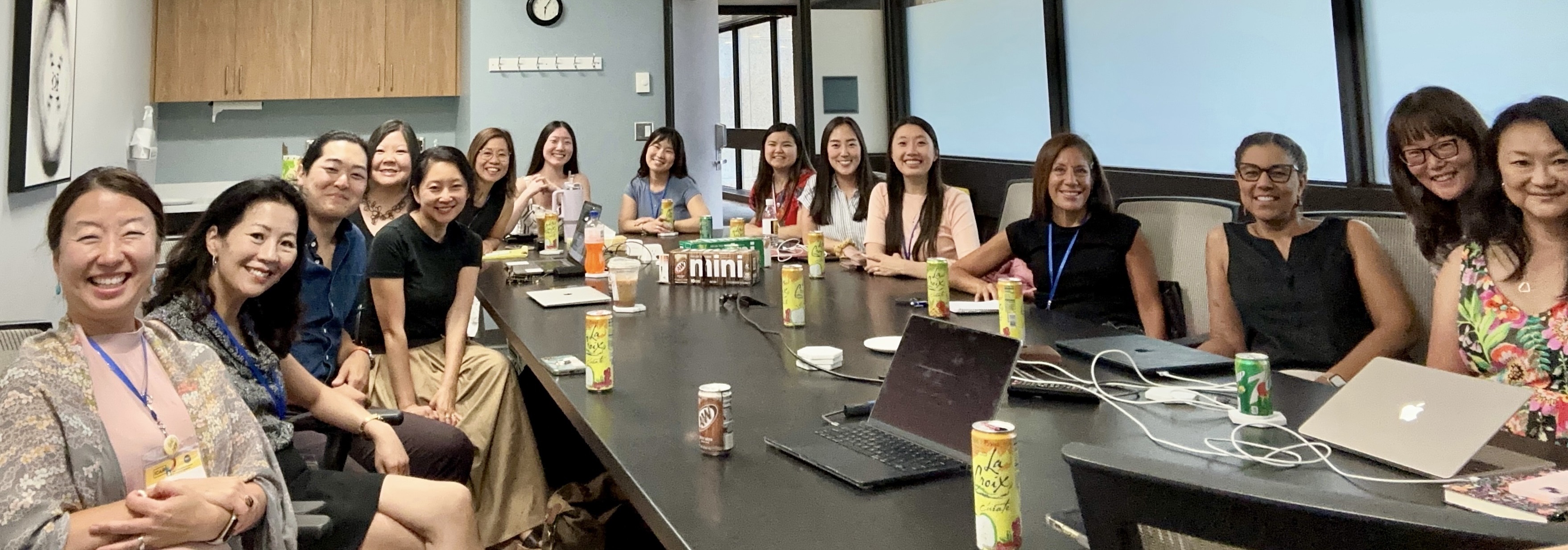
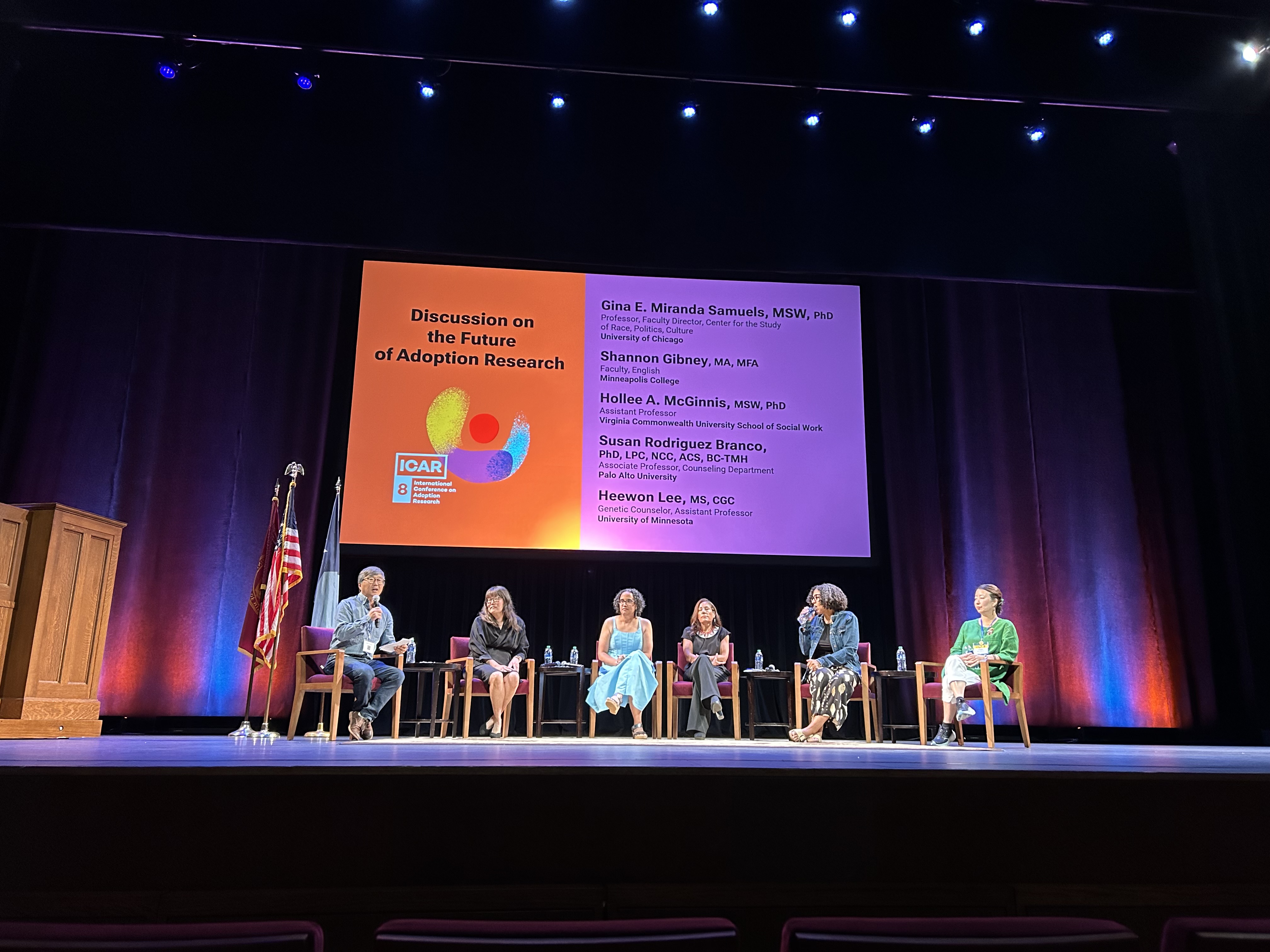
The Friday session was absolutely fantastic. The presentations by all of the scholars were paradigm-shifting and my hope is that all the non-adoptee folks from the conference left with new insights and perspectives. Dr. Gina Miranda Samuels and Dr. Hollee McGinnis both challenged the scholars to decolonize the way adoption research is traditionally conducted. Assistant Professor of Genetic Counseling Heewon Lee and Hollee both addressed health equity and health issue for adoptees over our lifespan. Dr. Susan Branco talked beautifully about how to conduct ethical research with victims of illicit adoption both with adoptees and origin parents (the term her participants preferred). Shannon Gibney read from her speculative memoir, The Girl I Am, Was, and Never Will Be.
Note: I want to acknowledge the immense amount of work that goes into planning a conference and my critiques are my personal reflections only and not meant to be directed toward anyone specific involved in planning this conference.
Most conferences have one or two keynotes a day – a morning one and perhaps a lunchtime or afternoon plenary. This one chose to have keynote presenters the first three days from 8:30-1 pm. The majority of these keynote speakers spoke on research studies looking at the effects of children in institutional care from a physical, neurological, psychological, and behavioral perspective – in other words, quite clinical. Other topics included brain imaging and childhood development, and nutrition. In addition to the clinical topics there were presentations on improving adoption and child welfare practices. Because these were keynote speakers, there were no competing sessions. Everyone attended these sessions (or did not attend at all). Keynotes are prime time – they are meant to capture the attention of all of the audience. The list of scholars were primarily white scholars, and although a couple self-identified as adoptive parents I don’t recall any of the scholars identifying as adoptees. One adoptive parent speaker totally overshared her adopted child’s story without mentioning if she’d been given consent to share (I sure hope that was the case).
In the afternoon there were two periods for breakout sessions. Participants had a choice of 4-5 sessions they could attend for each of the two afternoon breakout sessions. And, because these sessions often had 4-5 presenters during the 90-minute time, some presenters were only allotted 15 minutes to present their research or topic.
Stepping back, what stood out for me was the forced focus on one type of research over others.
I have never ever attended a professional conference in which so many hours of each day were limited to a specific type of keynote speakers. By choosing to limit conference attendees to only these research topics, the conference planning committee was sending a message about what they felt was the important knowledge and information for attendees. I wasn’t upset about the topics per se, but I was frustrated that they were all given so much prime keynote time.
There were a couple of speakers with lived experience (a few were adoptive parents, of course, and a few were adopted or had spent time in foster care) but none of the adoptees or lived foster care/orphange care experience presenters were adoptee SCHOLARS. In fact, I would argue these folks with lived experience were there to “inspire” the non-adoptees in the room and serve as “adoptee poster children.” I don’t fault anything about these folks’ stories or their presentations, but to me they definitely felt on display as models of what non-adoptees want to see from us – to see living proof their adoption interventions “saved” us.
I didn’t understand why there wasn’t another morning breakout session, or why there wasn’t a track for clinical and medical type of presentations for attendees to choose. Some of the keynotes were helpful and others were…well, I’ll just say there were a couple that I thought were very poor or irrelevant to my work, and it was frustrating to feel forced to spend my time there instead of being able to attend other sessions. My ability to attend other sessions was very limited because there were so many concurrent sessions in the limited afternoon times and I presented at three of the times.
My second main critique was about the ways adoptee scholars were treated by the planning committee.
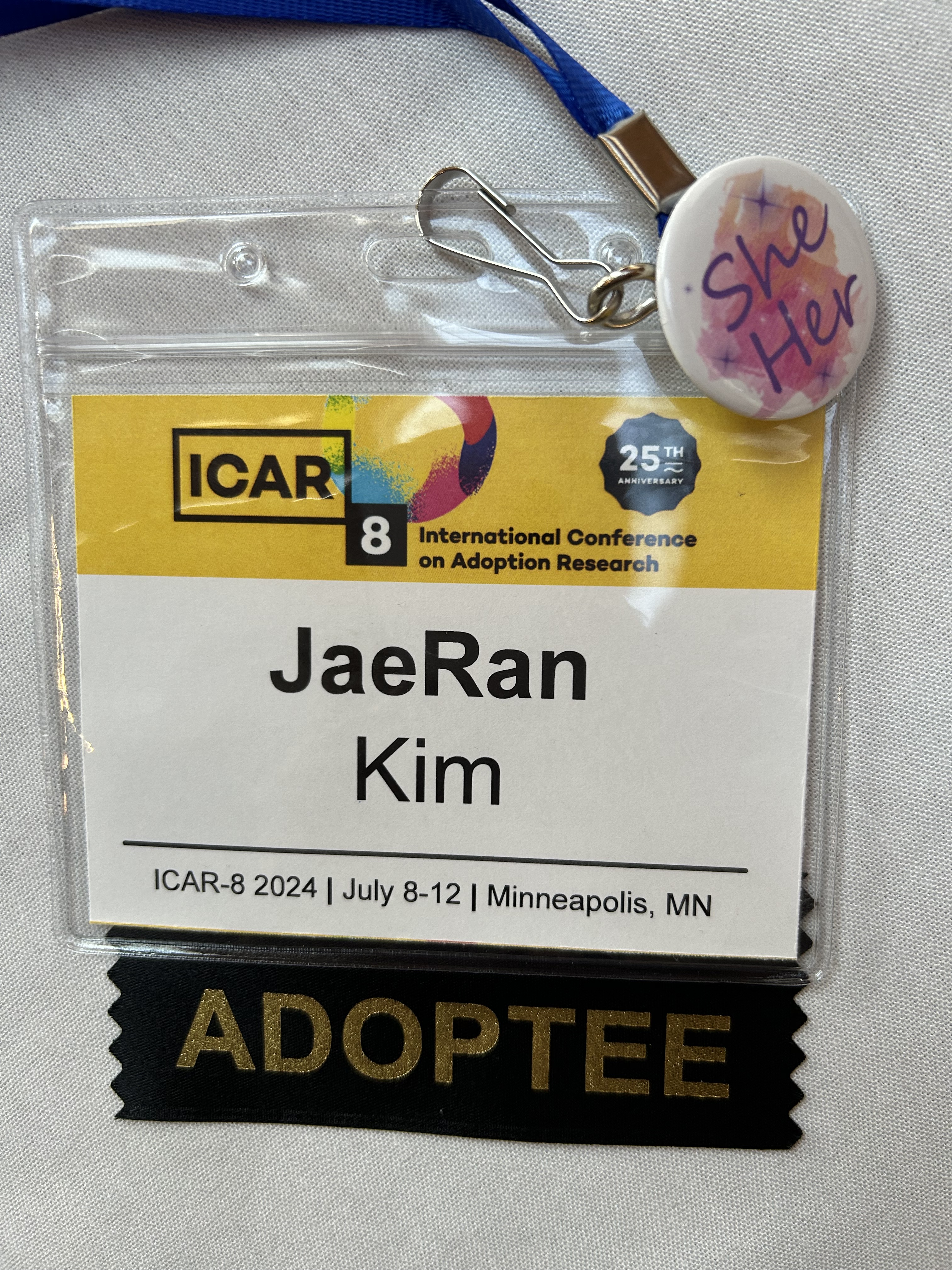
I include a photo of my name badge here and you can see the black label on the bottom that says “adoptee.” Adding tags and labels have been fairly common at most conferences – often you can get a label for pronouns, if you’re a presenter or keynote speaker, if you’re a researcher or practitioner, for number of years you’ve attended the conference, for whether you’re on a planning committee or have some other important role. For this conference there was only ONE label and that was for adoptees.
I don’t understand why there weren’t labels for adoptive parents (of whom many were in attendance) or adoption professionals. Nope, just adoptees. I don’t know if the intent was to somehow honor adoptees, but the impact was adoptees felt stigmatized and othered. I added the label out of principal, but most of the adoptee scholars and practitioners at this conference refused to add it to their name badges. In my opinion this was a huge misstep. One of the byproducts of labeling only the adoptees is the feeling our status could be used to discredit us as scholars and professionals.
Final reflections
As a social work scholar, I am used to the dominant narrative of adoption focused on saving and rescuing children and presenting adoption as the favored intervention. In this narrative, nobody thinks of adoptees as middle aged or as older adults. Hollee and I have talked about this a lot – the oldest wave of Korean adoptees are in their 70s and 80s and as Hollee mentioned in her presentation, adoption has been seen as this grand experiment and yet none of the adoption scholars bothered to follow up with us to see if it worked.
I am also used to being one of the few adoptee scholars at this conference. I think, based on my interactions at the ICAR conference, that adoptee scholars are increasingly seen as more credible by non-adoptee scholars and practitioners. However, I can’t help but feel overall that this conference tone set adoption research back to twenty years ago in terms of how adoption is conceptualized.
I understand it’s hard to balance everyone’s needs and concerns at events such as these conferences. And, yes – there were adoptees on the planning committee. I think the mixed feelings I have about this conference was partly reflective of the differences in the adoptee community itself. Having adoptees at the table doesn’t always mean all adoptees will feel their needs and interests were met. I’m going to talk about the BIPOC Adoptees conference in another post because this one is already too long, but the intentionality of the planning team for that conference was a stark contrast to the academic one.
Not that anyone asked, but I have a few suggestions for those thinking about planning an adoption research conference. First, at least each day there should be an adoptee scholar keynote. I don’t want adoptees to be relegated to only inspirational speeches or musical performers. There are many adoptee scholars and our work needs to be highlighted!
Second, adoptees should never be expected to be the only attendees at a conference who have to signal their identity status. Adoptive parents, adoption professionals, etc. should all be identified if you’re going to ask adoptees to self-identify.
Third, don’t only hire adoptees or those with lived experience in care to be your “entertainment.” It’s demeaning, not inclusive, unless you actually also put us in your line-up of keynote speakers, and important committees. We are not your token model minority adoptees. We are not your inspiration porn.
Finally, please offer more breakout sessions so attendees can have choices and perhaps even consider having at least one dedicated session each breakout time focused on adult adoptee research. If your organization cares about children deemed to be in need of adoption, you’d better have equal care for the impact of said adoption on us once we become adults.
 Harlow's Monkey