In the 1950s, when Sandy White Hawk was a toddler, she was taken from her Lakota family on the Rosebud Indian Reservation in South Dakota. Her adoption papers identify her as “a child of the Indian race,” and her adoptive mother never let her forget it, telling her she was unwanted and shaming her for being “Indian.” White Hawk medicated her traumas with drugs and alcohol. At age twenty-eight, she gained sobriety and reconnected with her birth relatives. As she learned what it means to be Lakota, she also learned that thousands of Native adoptees shared her experience—left to navigate racial and cultural complexities as children, with no way to understand what was happening to them. Mentored by a respected elder, White Hawk began to work with relatives who also had been separated by adoption and foster care, taken away from their families and communities. Fighting through her feelings of inadequacy, she accepted that she could use her voice to advocate. Ultimately, White Hawk founded the First Nations Repatriation Institute, an organization that addresses the post-adoption issues of Native American individuals, families, and communities.

At only five years old, Saroo Brierley got lost on a train in India. Unable to read or write or recall the name of his hometown or even his own last name, he survived alone for weeks on the rough streets of Calcutta before ultimately being transferred to an agency and adopted by a couple in Australia. Despite his gratitude, Brierley always wondered about his origins. Eventually, with the advent of Google Earth, he had the opportunity to look for the needle in a haystack he once called home, and pore over satellite images for landmarks he might recognize or mathematical equations that might further narrow down the labyrinthine map of India. One day, after years of searching, he miraculously found what he was looking for and set off to find his family. A Long Way Home is a moving, poignant, and inspirational true story of survival and triumph against incredible odds. It celebrates the importance of never letting go of what drives the human spirit: hope.

Nicole Chung was born severely premature, placed for adoption by her Korean parents, and raised by a white family in a sheltered Oregon town. From childhood, she heard the story of her adoption as a comforting, prepackaged myth. She believed that her biological parents had made the ultimate sacrifice in the hope of giving her a better life, that forever feeling slightly out of place was her fate as a transracial adoptee. But as Nicole grew up—facing prejudice her adoptive family couldn’t see, finding her identity as an Asian American and as a writer, becoming ever more curious about where she came from—she wondered if the story she’d been told was the whole truth.
With warmth, candor, and startling insight, Nicole Chung tells of her search for the people who gave her up, which coincided with the birth of her own child. All You Can Ever Know is a profound, moving chronicle of surprising connections and the repercussions of unearthing painful family secrets—vital reading for anyone who has ever struggled to figure out where they belong.

A young Korean woman describes her adoption by an American family from Salt Lake City, Utah, her return twenty years later to Seoul to search for her birth mother, and her discovery that she had become an American outsider in her native land.

Compelling True Story Shows How to Cross Cultural Barriers This inspiring account of adoption, reunion, and heritage from Thomas Brooks provides a timely and provocative perspective on multicultural families and powerful insights on overcoming racism and poverty. Brooks grew up as the only child of a struggling single mother in inner-city Pittsburgh. He was battling racial stereotypes at school and searching for a place among his peers. Then he was told at age eleven that he was adopted. He did not know it at the time, but Brooks had actually been born to a white biological mother who descended from Lithuanian Jews and a black Kenyan foreign student father. Years after that stunning revelation, Brooks escaped the ghetto and traveled to search for his heritage. He found his biological mother in London with his previously unknown British siblings. He then located his biological father and extended family in Nairobi. His international search and the resulting reunions have profoundly affected three families in the United States, England, and Kenya.

When Pat McMahon risks the love of the mother who raised him by seeking out the mother who gave him away, he transforms from a mild-mannered engineer into a frenetic detective. After he overcomes the challenges of existential angst, bureaucratic roadblocks, and unemployment, the phone call to his first mother releases a torrent of long-buried feelings. During a sometimes turbulent long-distance unfolding, he absorbs her shocking revelations and comes out as gay once again. Their eventual reunion creates a profound bond, even as he navigates waves of conflicting emotions, merges past with present, and embarks on a new future rooted in truth and insights into the universal quest for identity and human connection. He is Becoming Patrick.

Bestselling author Jean Strauss’s memoir about her quest to unearth her past is an incredibly funny and touching journey that redefines the meaning of family and celebrates the universal connections that link us all.
In poet Bo Hee Moon’s newest collection, Birthstones in the Province of Mercy (Milkweed Editions, 2026), an adopted daughter and her birth mother reunite across time, cultures, and fate. Moon captures the complex emotions she feels about her identity as a South Korean adoptee, using verse to process her grief, trauma, and love. Winner of the Jake Adam York Prize, this collection is a transparent and masterful wielding of raw emotion.
In Bitterroot Susan Devan Harness traces her journey to understand the complexities and struggles of being an American Indian child adopted by a white couple and living in the rural American West. When Harness was fifteen years old, she questioned her adoptive father about her “real” parents. He replied that they had died in a car accident not long after she was born—except they hadn’t, as Harness would learn in a conversation with a social worker a few years later. Harness’s search for answers revolved around her need to ascertain why she was the target of racist remarks and why she seemed always to be on the outside looking in. New questions followed her through college and into her twenties when she started her own family. Meeting her biological family in her early thirties generated even more questions. In her forties Harness decided to get serious about finding answers when, conducting oral histories, she talked with other transracial adoptees. In her fifties she realized that the concept of “home” she had attributed to the reservation existed only in her imagination. Making sense of her family, the American Indian history of assimilation, and the very real—but culturally constructed—concept of race helped Harness answer the often puzzling questions of stereotypes, a sense of nonbelonging, the meaning of family, and the importance of forgiveness and self-acceptance. In the process Bitterroot also provides a deep and rich context in which to experience life.
It is only months following the assassination of Martin Luther King, Jr., and the nation is burning. Black and White America are locked in the tense grip of massive change. Into this inferno steps an unsuspecting young White couple. Neither truly knew even a single African American person while growing up. Now, a child will change all of that forever. Over the fateful years to come, a Black child becomes perhaps the first in the history of New Mexico to be adopted by a White family.Here is a brazenly honest glimpse into the mind and heart of that child, a true story for the ages that flows like a soulful river-separated from his mother at birth, placed into foster care, adopted, and finally reunited with his biological family in adulthood-an astounding journey of personal discovery. Jaiya John has opened the floodgates on his own childhood with this piercing memoir. Black Baby White Hands, a waterfall of jazz splashing over the rocks of love, pain and the honoring of family. Magically, this book finds a way to sing as it cries, and to exude compassion even as it dispels well-entrenched myths. This story is sure to find itself well worn, stained by tears, and brushed by laughter in the lap of parents, adolescents, educators, students and professionals. Here comes the rain and the sunshine, all at once.

Where do I belong? Barbara Gowan sought to answer this question as she searched for the real meaning of family. The product of an interracial relationship in the 1960s, she lived in foster care before her adoption by loving-and complex-parents. In this candid account, she faces her long-standing inner conflicts with race, religion, and identity as she searches for her birth parents and her life’s purpose. Gowan’s emotional and inspirational story deals with overcoming abuse, loss, codependency, and rejection. She demonstrates how important the multifaceted concepts of faith, family, and love are in all human relationships, and how they form our sense of self. She shares not only her personal insights and revelations but also concrete strategies from other adoptees and respected professionals. The result is a compelling narrative that will educate and support members of the adoption and multicultural community. Gowan’s deeply personal Christian testimonial provides an honest perspective on these often-challenging conflicts.
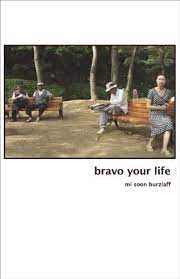
Bravo Your Life is a collection of creative nonfiction vignettes about life, family, and friendship in contemporary South Korea. As Korean American adoptee author Mi Soon Burzlaff slowly acculturates herself into her birth family and society at large, her writing opens an illuminating window into Seoul’s raw and dynamic identity.
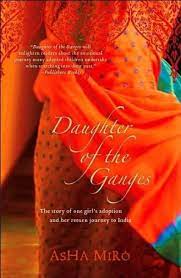
Growing up in an Indian orphanage, Asha Miró; dreamed that someday she would be adopted. At the age of six, her wish finally came true, but only at the misfortune of another. A Catalan family was in the process of adopting twins when one of the children suddenly fell ill and died — a twist of fate that led the family to adopt Asha instead. Leaving a life of poverty behind, Asha was given a second chance. Twenty-one years later, Asha takes a heart-wrenching trip back to India to uncover her native roots. Full of unexpected encounters, this adventure informs and touches Asha beyond her expectations. She visits her old orphanage, speaks with her former caretakers, explores the land that she might not have ever left, and comes to form a more solid identity. Yet one trip is not enough. Eight years later she returns, this time visiting the small rural village where she was born. While uncovering the details behind her adoption, Asha discovers the only living member of her immediate Indian family: a sister she never knew she had.

Thomas Park Clement musically invokes his early Dickensian childhood, tender pained youth (always hard at work and play), inventive enterprises and their phenomenal successes, and, in his adulthood, his ongoing concern about orphans with overflowing generosity and love. This vibrant record of lived life differs from the greatest of fictional depictions of orphaned childhoods blighted into a ruin. For Thomas’ solid creative soul that has withstood and triumphed emerges in this book as a superb work of art, capable of speaking to us of the mysteries of what it is to be human, what is best and beautiful in life, that transforms our own soul to a finer shape. It is a work of art the creative mind of the inventor has ceaselessly reshaped, a work of art that shows paths to freedom from the imprisoning past looking into the future by caring about others.

Even Tough Girls Wear Tutus is a diary of a woman whose gift for finding purpose in life drives her to help others change their lives even as she struggles to accept and overcome her own past – born heroin addicted to a mother in prison. Her story proves we are more than the sum of our parts and there’s always a chance for redemption.

Baby Boy Fisher was raised in institutions from the moment of his birth in prison to a single mother. He ultimately came to live with a foster family, where he endured near-constant verbal and physical abuse. In his mid-teens he escaped and enlisted in the navy, where he became a man of the world, raised by the family he created for himself. Finding Fish shows how, out of this unlikely mix of deprivation and hope, an artist was born — first as the child who painted the feelings his words dared not speak, then as a poet and storyteller who would eventually become one of Hollywood’s most sought-after screenwriters. A tumultuous and ultimately gratifying tale of self-discovery written in Fisher’s gritty yet melodic literary voice, Finding Fish is an unforgettable reading experience.
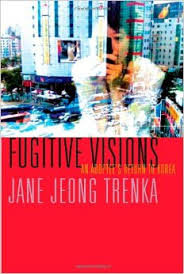
Whenever she speaks to a stranger in her native Korea, Jane Jeong Trenka is forced to explain what she is. Japanese? Chinese? The answer-that she was adopted from Korea as a baby and grew up in the United States-is a source of grief, pride, and confusion. Trenka’s award-winning first book, The Language of Blood, told the story of her upbringing in a white family in rural Minnesota. Now, in this searching and provocative memoir, Trenka explores a new question: Can she make an adult life for herself in Korea? Despite numerous setbacks, Trenka resolves to learn the language and ways of her unfamiliar birth country. In navigating the myriad contradictions and disjunctions that have made up her life, Trenka turns to the lessons from her past-in particular, the concept of dissonance and harmony learned over her years as a musician. In Fugitive Visions, named after a composition by Prokofiev, Trenka has succeeded in braiding the disparate elements of her life into a recognizable and at times heartbreaking whole.

“Ghost of Sangju” takes readers through Soojung Jo’s childhood in Kentucky filled with joy, family, friendship—and the loneliness of being marked as an outsider even in her own home. Alternating between humor and heartbreak, she offers a glimpse into a life foreign to most: that of a West Point cadet and her return to South Korea, the country that had once sent her away. Soojung vividly paints a portrait of marriage, parenthood (as both a biological and adoptive mother) and the tumultuous emotions of reuniting, rediscovering, and reestablishing lost familial bonds. “Ghost of Sangju” is a story of one woman’s journey to merge her two selves, and the universal search for self-discovery, identity, and reconciliation.
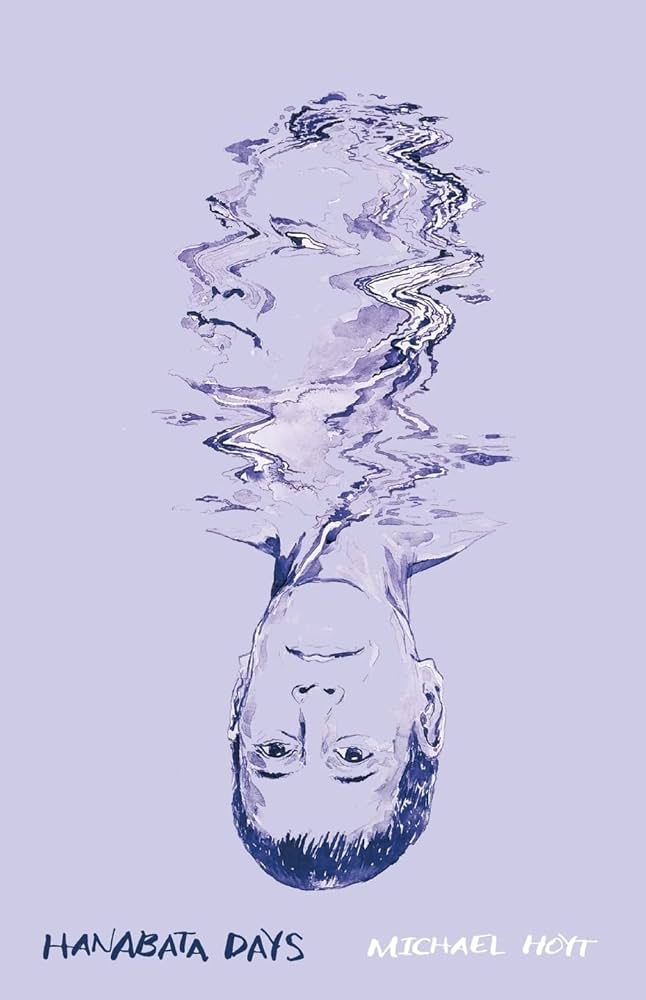
Hanabata Days is a graphic memoir that explores the unexpected reunion of a father and son, 47 years after separation.The diasporic story unfolds visually over the span of 60+ years navigating shifting geographic and cultural dissonance, from pre-tourism Hawai’i to present day Middle America. Its central characters’ hidden pasts are made visible to one another after searching for answers compelled by hope, premonition, the stars, currents, and the introduction of ancestral coordinates unlocked via shared genetic data.How do two familial strangers proceed forward and make meaning together? What possible pasts can be known and never known? What secrets should remain buried? And is their path to redemption intricately dependent on one another? Hanabata Days connects two lives impacted by different forms of colonization, silence, and ambiguous longing. Each seeking to reckon with their complex pasts towards reclamation.
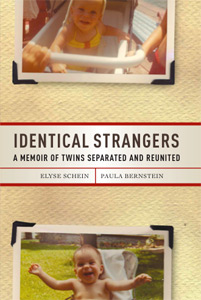
Elyse Schein had always known she was adopted, but it wasn’t until her mid-thirties while living in Paris that she searched for her biological mother. What she found instead was shocking: She had an identical twin sister. What’s more, after being separated as infants, she and her sister had been, for a time, part of a secret study on separated twins. Paula Bernstein, a married writer and mother living in New York, also knew she was adopted, but had no inclination to find her birth mother. When she answered a call from her adoption agency one spring afternoon, Paula’s life suddenly divided into two starkly different periods: the time before and the time after she learned the truth. As they reunite, taking their tentative first steps from strangers to sisters, Paula and Elyse are left with haunting questions surrounding their origins and their separation. And when they investigate their birth mother’s past, the sisters move closer toward solving the puzzle of their lives.

Growing up with adoptive nisei parents, Susan Kiyo Ito knew only that her birth mother was Japanese American and her father White. But finding and meeting her birth mother in her early 20s was only the beginning of her search for answers, history, and identity. Though the two share a physical likeness, an affinity for ice cream, and a relationship that sometimes even feels familial, there is an ever-present tension between them, as a decades-long tug-of-war pits her birth mother’s desire for anonymity against Ito’s need to know her origins, to see and be seen. Along the way, Ito grapples with her own reproductive choices, the legacy of the Japanese American incarceration experience during World War II, and the true meaning of family. An account of love, what it’s like to feel neither here nor there, and one writer’s quest for the missing pieces that might make her feel whole, I Would Meet You Anywhere is the stirring culmination of Ito’s decision to embrace her right to know and tell her own story.
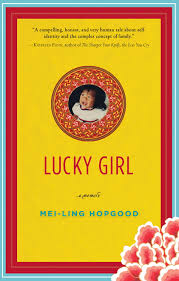
In a true story of family ties, journalist Mei-Ling Hopgood, one of the first wave of Asian adoptees to arrive in America, comes face to face with her past when her Chinese birth family suddenly requests a reunion after more than two decades. In 1974, a baby girl from Taiwan arrived in America, the newly adopted child of a loving couple in Michigan. Mei-Ling Hopgood had an all-American upbringing, never really identifying with her Asian roots or harboring a desire to uncover her ancestry. She believed that she was lucky to have escaped a life that was surely one of poverty and misery, to grow up comfortable with her doting parents and brothers. Then, when she’s in her twenties, her birth family comes calling. Not the rural peasants she expected, they are a boisterous, loving, bossy, complicated middle-class family who hound her daily―by phone, fax, and letter, in a language she doesn’t understand―until she returns to Taiwan to meet them. As her sisters and parents pull her into their lives, claiming her as one of their own, the devastating secrets that still haunt this family begin to emerge. Spanning cultures and continents, Lucky Girl brings home a tale of joy and regret, hilarity, deep sadness, and great discovery as the author untangles the unlikely strands that formed her destiny.

Monstrous is poignant young adult graphic memoir about a Korean-American girl who uses fandom and art-making to overcome racist bullying. Perfect for fans of Almost American Girl! Sarah has always struggled to fit in. Born in South Korea and adopted at birth by a white couple, she grows up in a rural community with few Asian neighbors. People whisper in the supermarket. Classmates bully her. She has trouble containing her anger in these moments―but through it all, she has her art. She’s always been a compulsive drawer, and when she discovers anime, her hobby becomes an obsession. Though drawing and cosplay offer her an escape, she still struggles to connect with others. And in high school, the bullies are louder and meaner. Sarah’s bubbling rage is threatening to burst.
This is an award-winning story about family, adoption, heritage, and identity. It is also about place and people. Haralambie invites you to accompany her on her search for her biological roots, the hurdles and misdirections, and what happens when she finally finds out who her biological family members are. Every adoption search and reunion are different. The results, and how each adoptee deals with them, are also different. But everyone who has been touched by adoption, whether directly or through friends, professional clients, or patients—can learn from others’ experiences. Haralambie’s journey will intrigue readers and may make them laugh and cry. It will surely get them thinking about their own identity and heritage. Her message for readers is to approach the quest with kindness and understanding.

Jenny Heijun Wills was born in Korea and adopted as an infant into a white family in small-town Canada. In her late twenties, she reconnected with her first family and returned to Seoul where she spent four months getting to know other adoptees, as well as her Korean mother, father, siblings, and extended family. At the guesthouse for transnational adoptees where she lived, alliances were troubled by violence and fraught with the trauma of separation and of cultural illiteracy. Unsurprisingly, heartbreakingly, Wills found that her nascent relationships with her family were similarly fraught. Ten years later, Wills sustains close ties with her Korean family. Her Korean parents and her younger sister attended her wedding in Montreal, and that same sister now lives in Canada. Remarkably, meeting Jenny caused her birth parents to reunite after having been estranged since her adoption. Little by little, Jenny Heijun Wills is learning and relearning her stories and those of her biological kin, piecing together a fragmented life into something resembling a whole. Delving into gender, class, racial, and ethnic complexities, as well as into the complex relationships between Korean women–sisters, mothers and daughters, grandmothers and grandchildren, aunts and nieces–Older Sister. Not Necessarily Related. describes in visceral, lyrical prose the painful ripple effects that follow a child’s removal from a family, and the rewards that can flow from both struggle and forgiveness.

A testament to the more than 100,000 Korean adoptees who have come to the United States since the 1950s, this collection of oral histories features the stories of nine Korean Americans who were adopted as children and the struggles they’ve shared as foreigners in their native lands. From their early confrontations with racism and xenophobia to their later-in-life trips back to Korea to find their roots (with mixed results), these narratives illustrate the wide variety of ways in which all adoptive parents and adoptees—not just those from Korea—must struggle with issues of identity, alienation, and family.
Prison Baby is a revised and substantially expanded version of Deborah Jiang Stein’s self-published memoir, Even Tough Girls Wear Tutus. Even at twelve years old, Deborah, the adopted daughter of a progressive Jewish couple in Seattle, felt like an outsider. Her multiracial features set her apart from her white, well-intentioned parents who evaded questions about her past. But when she discovered a letter revealing the truth of her prison birth to a heroin-addicted mother–and that she spent the first year of life in prison–Deborah spiraled into emotional lockdown. For years she turned to drugs, violence, and crime as a way to cope with her grief. Ultimately, Deborah overcame the stigma, shame, and secrecy of her birth, and found peace by helping others–proving that redemption and acceptance is possible even from the darkest corners.

From the moment when, as a little girl, she realizes that her skin is a different colour from that of her beloved mum and dad, to the tracing and finding of her birth parents, her Highland mother and Nigerian father, the journey that Jackie Kay undertakes in Red Dust Road is full of unexpected twists, turns and deep emotions. In a book shining with warmth, humour and compassion, she discovers that inheritance is about much more than genes: that we are shaped by songs as much as by cells, and that our internal landscapes are as important as those through which we move. Taking the reader from Glasgow to Lagos and beyond, Red Dust Road is revelatory, redemptive and courageous, unique in its voice and universal in its reach. It is a heart-stopping story of parents and siblings, friends and strangers, belonging and beliefs, biology and destiny, and love.
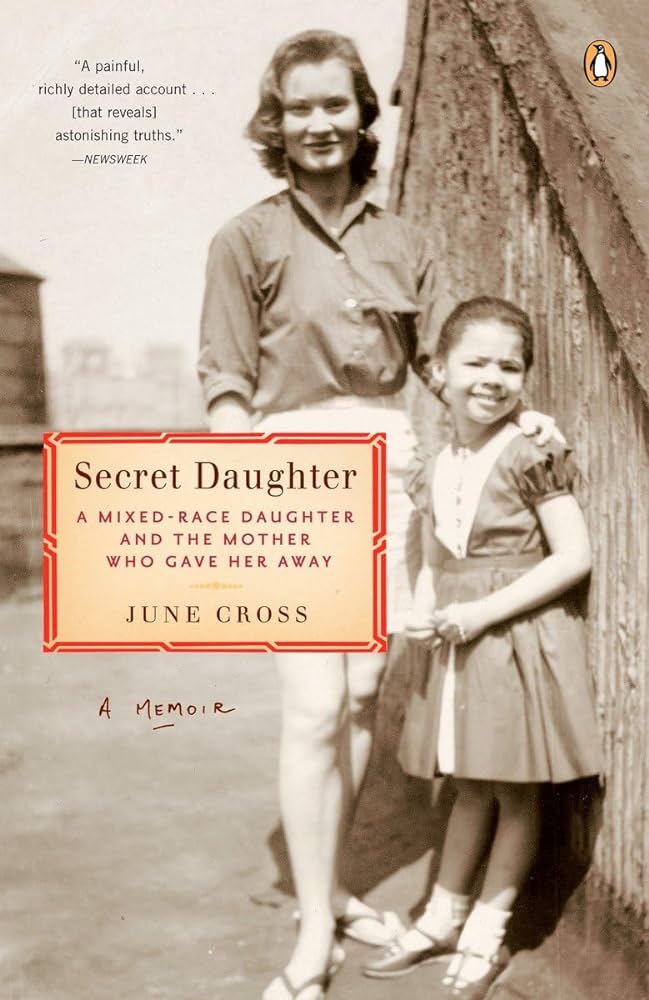
June Cross was born in 1954 to Norma Booth, a glamorous, aspiring White actress, and James “Stump” Cross, a well-known Black comedian. Sent by her mother to be raised by Black friends when she was four years old and could no longer pass as White, June was plunged into the pain and confusion of a family divided by race. Secret Daughter tells her story of survival. It traces June’s astonishing discoveries about her mother and about her own fierce determination to thrive. This is an inspiring testimony to the endurance of love between mother and daughter, a child and her adoptive parents, and the power of community.

An anthology of Korean adoptee poetry.

Part memoir, part speculative fiction, this novel explores the often surreal experience of growing up as a mixed-Black transracial adoptee. Dream Country author Shannon Gibney returns with a new book woven from her true story of growing up as the adopted Black daughter of white parents and the fictional story of Erin Powers, the name Shannon was given at birth by the white woman who gave her up for adoption. At its core, the novel is a tale of two girls on two different timelines occasionally bridged by a mysterious portal and their shared search for a complete picture of their origins. Gibney surrounds that story with reproductions of her own adoption documents, letters, family photographs, interviews, medical records, and brief essays on the surreal absurdities of the adoptee experience. The end result is a remarkable portrait of an American experience rarely depicted in any form.

This book consists of five autobiographical narratives by Susan Harris O’Connor, a social worker and transracial adoptee. These monologues were developed and performed around the United States in academic, clinical and child welfare settings to wide acclaim over the last sixteen years. They will be of immediate interest to scholars of race, identity, emotional intelligence, adoption, child welfare, as well as clinicians and those directly impacted in families created by adoption. The book will also speak to writers, performers and individuals interested in developing their voice through self-exploration. In her narratives the author explores in depth: the impact of foster care during the first 14 months of her life; her relationship with her unknown birth father; the role of race and racism for transracial adoptees who grow up in white communities; the development of her racial identity and a model derived from these experiences, and the relationships between her different identities or mind constructs, her inner strengths and vulnerabilities, and the outside world. There is a progression one chapter to the next, chronicling greater understanding, deeper reflection, and a developing voice. This is an original and sophisticated exploration of the inner life of a transracial adoptee and the forces that helped shape her life. It is at once a case study and an observation of the human condition with universal appeal.
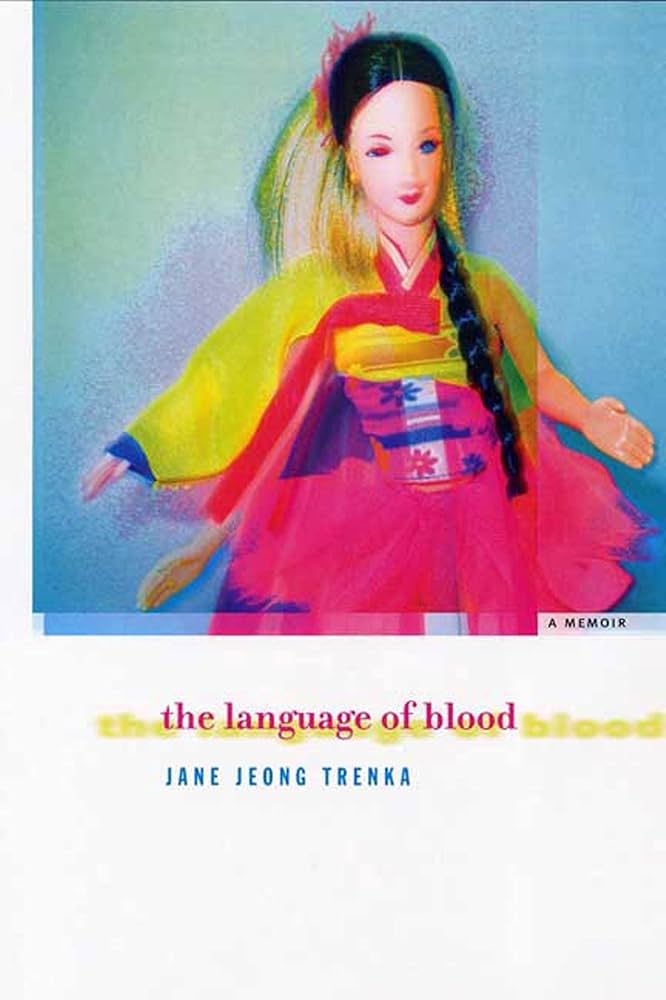
Jane Jeong Trenka and her sister Carol were adopted by Frederick and Margaret Brauer and raised in the small, homogeneous town of Harlow, Minnesota―a place “where the sky touches the earth in uninterrupted horizon . . . where stoicism is stamped into the bones of each generation.” They were loved as American children without a past. With inventive and radiant prose that includes real and imagined letters, a fairy tale, a one-act play, crossword puzzles, and child-welfare manuals, Trenka recounts a childhood of insecurity, a battle with a stalker that escalates to a plot for her murder, and an extraordinary trip to Seoul to meet her birth mother and siblings. Lost between two cultures for the majority of her life, it is in Korea that she begins to understand her past and the power of the unspoken language of blood.

The acclaimed writer A. M. Homes was given up for adoption before she was born. Her biological mother was a twenty-two-year-old single woman who was having an affair with a much older married man with a family of his own. The Mistress’s Daughter is the ruthlessly honest account of what happened when, thirty years later, her birth parents came looking for her. Homes relates how they initially made contact and what happened afterwards, and digs through the family history of both sets of her parents in a twenty-first-century electronic search for self. Daring, heartbreaking, and startlingly funny, Homes’s memoir is a brave and profoundly moving consideration of identity and family.

Born as a ward of the state of Maine, the child of an unmarried Yankee blueblood mother and an unknown black father, Victoria Rowell beat the odds. The Women Who Raised Me is the remarkable story of her rise out of the foster care system to attain the American Dream—and of the unlikely series of women who lifted, motivated, and inspired her along the way. From Agatha Armstead—a black Bostonian who was Victoria’s longest-term foster mother and first noticed her spark of creativity and talent—to Esther Brooks, a Paris-trained prima ballerina who would become her first mentor at the Cambridge School of Ballet—The Women Who Raised Me is a loving, vivid portrait of all the women who would help Victoria transition out of foster care and into New York City’s wild worlds of ballet, acting, and adulthood. Though Victoria would go on to become an accomplished television and film star, she still carried the burden of loneliness and anxiety, particularly common to those “orphans of the living” who are never adopted. Vividly recalled and candidly told, her story is transfixing, redemptive, heartbreaking, and, ultimately, inspiring.
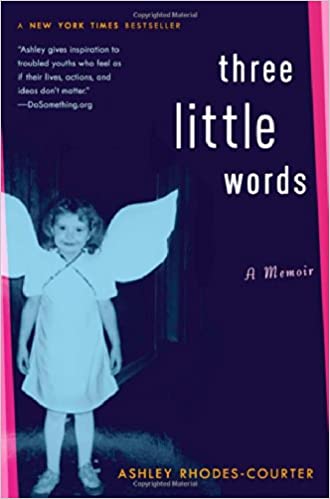
“Sunshine, you’re my baby and I’m your only mother. You must mind the one taking care of you, but she’s not your mama.” Ashley Rhodes-Courter spent nine years of her life in fourteen different foster homes, living by those words. As her mother spirals out of control, Ashley is left clinging to an unpredictable, dissolving relationship, all the while getting pulled deeper and deeper into the foster care system. Painful memories of being taken away from her home quickly become consumed by real-life horrors, where Ashley is juggled between caseworkers, shuffled from school to school, and forced to endure manipulative, humiliating treatment from a very abusive foster family. In this inspiring, unforgettable memoir, Ashley finds the courage to succeed—and in doing so, discovers the power of speaking out.
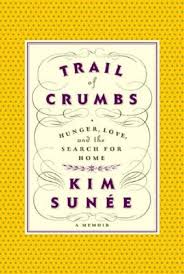
When Kim Sunée was three years old, her mother took her to a marketplace, deposited her on a bench with a fistful of food, and promised she’d be right back. Three days later a policeman took the little girl, clutching what was now only a fistful of crumbs, to a police station and told her that she’d been abandoned by her mother. Fast-forward almost 20 years and Kim’s life is unrecognizable. Adopted by a young New Orleans couple, she spends her youth as one of only two Asian children in her entire community. At the age of 21, she becomes involved with a famous French businessman and suddenly finds herself living in France, mistress over his houses in Provence and Paris, and stepmother to his eight year-old daughter. Kim takes readers on a lyrical journey from Korea to New Orleans to Paris and, along the way serving forth her favorite recipes. A love story at heart, this memoir is about the search for identity and a book that will appeal to anyone who is passionate about love, food, travel, and the ultimate search for self.

A collection of works from a generation born in Korea and adopted to other countries. In the deepest recesses of memory, perhaps some clue remains, some shadowy recollection of a mother, of a land, now foreign, yet somehow vaguely familiar. They began life in Korea, but circumstances took them thousands of miles away to adoptive families in America, Europe, and Australia. From childhood they grew into their adopted cultures, but the reflection in the mirror, the whispers of strangers and the quiet beating of the heart perhaps told them of another land…seen through the eyes of a small child, felt in the language of a child’s heart. The writings and works contained in this book reflect experiences of Korean adoptees They are images and words that can never be completely removed from that child in Korea. They are “Voices from Another Place.”
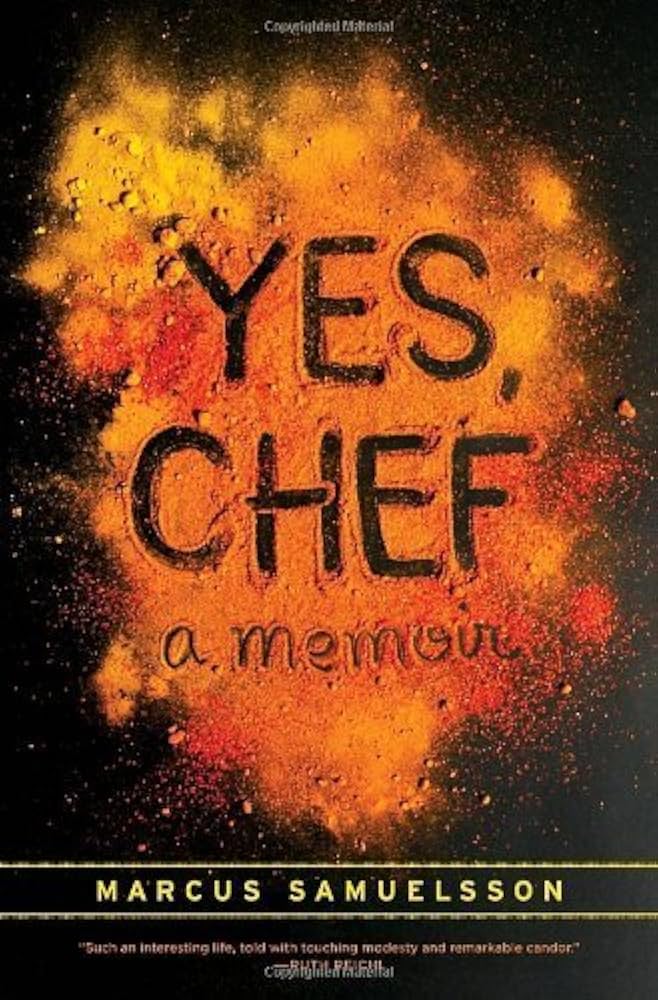
Marcus Samuelsson was only three years old when he, his mother, and his sister—all battling tuberculosis—walked seventy-five miles to a hospital in the Ethiopian capital city of Addis Adaba. Tragically, his mother succumbed to the disease shortly after she arrived, but Marcus and his sister recovered, and one year later they were welcomed into a loving middle-class white family in Göteborg, Sweden. It was there that Marcus’s new grandmother, Helga, sparked in him a lifelong passion for food and cooking with her pan-fried herring, her freshly baked bread, and her signature roast chicken. From a very early age, there was little question what Marcus was going to be when he grew up. Yes, Chef chronicles Marcus Samuelsson’s remarkable journey from Helga’s humble kitchen to some of the most demanding and cutthroat restaurants in Switzerland and France, from his grueling stints on cruise ships to his arrival in New York City, where his outsize talent and ambition finally come together at Aquavit, earning him a coveted New York Times three-star rating at the age of twenty-four. With disarming honesty and intimacy, Samuelsson also opens up about his failures—the price of ambition, in human terms—and recounts his emotional journey, as a grown man, to meet the father he never knew. Yes, Chef is a tale of personal discovery, unshakable determination, and the passionate, playful pursuit of flavors—one man’s struggle to find a place for himself in the kitchen, and in the world.
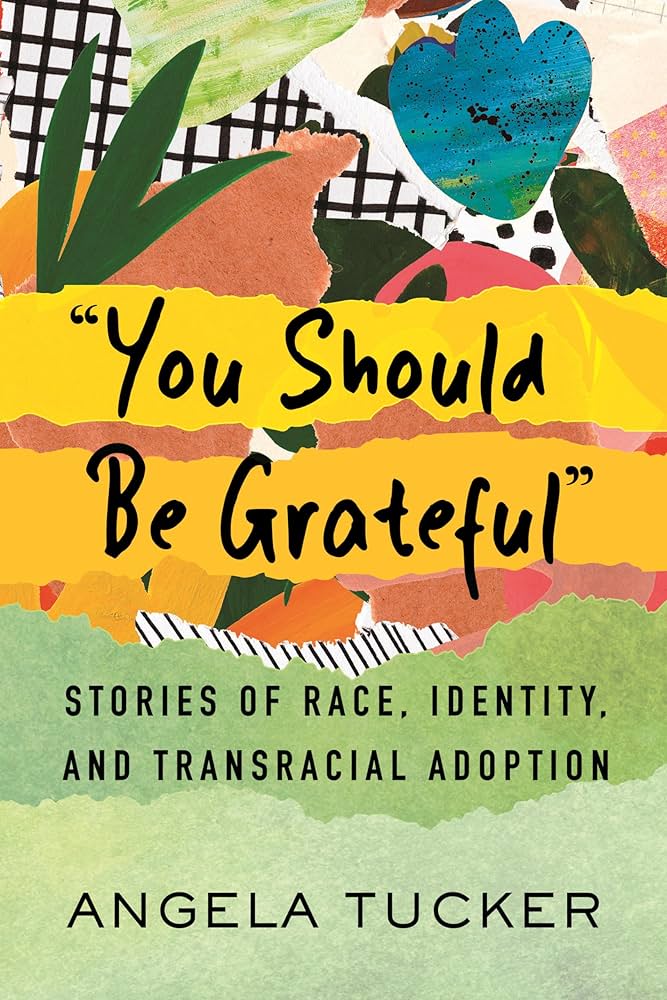
“Your parents are so amazing for adopting you! You should be grateful that you were adopted.” Angela Tucker is a Black woman, adopted from foster care by white parents. She has heard this microaggression her entire life, usually from well-intentioned strangers who view her adoptive parents as noble saviors. She is grateful for many aspects of her life, but being transracially adopted involves layers of rejection, loss, and complexity that cannot be summed up so easily. In “You Should Be Grateful,” Tucker centers the experiences of adoptees to share deeply personal stories, well-researched history, and engrossing anecdotes from mentorship sessions with adopted youth. These perspectives challenge the fairy-tale narrative of adoption, giving way to a fuller story that explores the impacts of racism, classism, family, love, and belonging.
 Harlow's Monkey