I am frequently asked about good books about adoption. This page started out as a list of the books I have read that have informed or influenced me in some way. These books range from academic to popular press and are heavily biased towards the adoptee perspective. What you will not find here (for the most part) are adoptive parent memoirs or “how to adopt” books. If adoptive parents have authored some of these books listed here, then I have found something more substantive in their pages than their personal “adoption journey.”
Over time with the increase in adoption books, I’ve started to add books I have not personally read. There are many more adoption books out there than what I’ve listed here. If you are an adoptee and are looking for resources for your own journey, these books could be a good place to begin. I definitely don’t agree with all of the positions and opinions expressed in these books; if they are listed here then I have found them helpful in some way (including to better understand different positions). As a note, I also include whenever I know, the author’s personal connection to adoption.
For more books about adoption with an adoptee-centric perspective, a great resource is the Adoptee Reading Resource website.
Happy reading!
ADOPTION BOOKS – GENERAL
These books are books I think provide solid understanding about adoption concepts, often from a historical perspective. Many of these authors are historians or have explored adoption concepts, practices, or perspectives from a U.S. based context.


A Sealed & Secret Kinship: Policies & Practices in American Adoption by Judith Schachter Modell and Kinship with Strangers: Adoption and Interpretations of Kinship in American Culture by Judith S. Modell. Both of these books are very informative and thought provoking. Kinship with Strangers was one of the first academic books on adoption that I read.


Adoption in America: Historical Perspectives (Edited by E. Wayne Carp) and Family Matters: Secrecy and Disclosure in the History of Adoption by E. Wayne Carp. Provides some much-needed historical contexts for adoption. These books continue to be helpful resources for my research, as it helps me understand the trajectory of adoption practices throughout the last two hundred years in the United States.
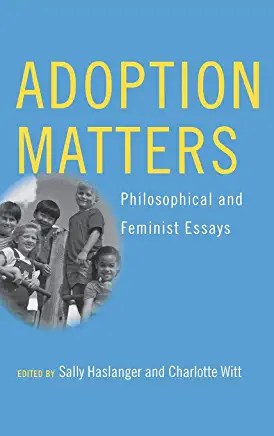
Adoption Matters: Philosophical and Feminist Essays. Some thought provoking essays, though I can’t say I thought all of the essays were uniformly engaging. My thought was that it addressed feminists views when it comes to adoptive parents, particularly mothers, but this book lacked engagement with the birth mother’s perspective and the degree to which parenting a child is part of reproductive choices from a feminist philosophical perspective.

Adoption Nation: How the Adoption Revolution is Transforming America by Adam Pertman. I include Pertman’s ubiquitous book merely for its popularity and anyone who is well-read in adoption probably needs to skim this book in order to understand why it is so popular among media and the public. An easy-to-digest book, squarely from an adoptive parent perspective. As an adoptee who wanted to be able to critique adoption systems, I read this to get a sense of the populist adoptive parent perspective. Pertman is an adoptive parent.

Adoption Unfiltered authors Sara Easterly (adoptee), Kelsey Vander Vliet Ranyard (birth parent), and Lori Holden (adoptive parent) interview dozens of adoptees, birth parents, adoptive parents, social workers, therapists, and other allies—all sharing candidly about the challenges in adoption. While finding common ground in the sometimes-contentious space of adoption may seem like a lofty goal, it reveals the authors’ optimistic aim: working together with truth and transparency to move toward healing.

American Baby: A Mother, a Child, and the Shadow History of Adoption by Gabrielle Glaser. This book is an in-depth account of the history of adoption practices in the U.S. during the post-war period as told through one family’s story. From the publisher: American Baby illuminates a dark time in our history and shows a path to reunion that can help heal the wounds inflicted by years of shame and secrecy.

Ethics in American Adoption by L. Anne Babb. I appreciate this book for tackling ethical issues in adoption that are often swept aside; I assign chapters of this book to my students when I teach my Permanency in Child Welfare courses. This book offers a comparison of ethical frameworks that have been used in adoption practices and provides suggestions for thinking about applying ethics to adoption practices. Babb is an adoptive parent.

Familial Fitness: Disability, Adoption, and Family in Modern America by Sandra Sufian. This is a book that discusses an aspect so central to adoption practice in the United States but is often couched in euphemisms and coded language. Suffian discusses the ways both children and adoptive parents were assessed for “fitness” based on eugenic and medical models of “normality.” Sufian is an adoptive parent.

Kinship by Design: A History of Adoption in the Modern United States by Ellen Herman. One of the best adoption history books in my opinion. I particularly like Herman’s concept of “kinship by design” and how it has taken what we would like to believe is a practice aimed at finding homes for children into a practice designed to find children for parents. Herman is an adoptive parent.
Like Our Very Own: Adoption and the Changing Culture of Motherhood, 1851-1950 by Julie Berebitsky. Berebitsky takes on maternalism in the Progressive Era and the impact of the social work and Progressive Era politics and ideology on adoption. From the publisher: Changing attitudes about adoption, as Berebitsky shows, have also mirrored changing definitions of motherhood. At a time when womanhood and motherhood were socially synonymous, both birth mothers who gave up their children and adoptive mothers seeking a maternal role were viewed as transgressors of the natural order.
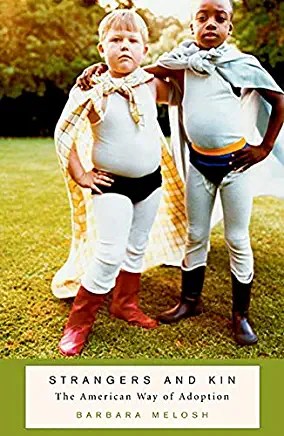
Strangers and Kin: The American Way of Adoption by Barbara Melosh. Using case studies from one state’s adoption agency, Melosh analyzes adoption practices in this informative book. From the publisher: Strangers and Kin is the history of adoption, a quintessentially American institution in its buoyant optimism, generous spirit, and confidence in social engineering. An adoptive mother herself, Barbara Melosh tells the story of how married couples without children sought to care for and nurture other people’s children as their own. It says much about the American experience of family across the twentieth century and our shifting notions of kinship and assimilation.

For almost three decades, renowned baby-seller Georgia Tann ran a children’s home in Memphis, Tennessee — selling her charges to wealthy clients nationwide, Joan Crawford among them. Part social history, part detective story, part expose, The Baby Thief is a riveting investigative narrative that explores themes that continue to reverberate today. Raymond is an adoptive parent.
The Morality Of Adoption: Social-Psychological, Theological, and Legal Perspectives edited by Timothy Jackson. This book offers a variety of perspectives and many of the essays I did not agree with at all. That said, it is helpful again to get a good understanding of different perspectives that others have about adoption and a book that could be useful for adoptees who really want to be able to counter the prevailing discourses about adoption. This is academic writing.

Twenty Things Adopted Kids Wish Their Adoptive Parents Knew by Sherrie Eldridge. Some decent basics here, from the adopted individual’s perspective. I consider this book to be a litmus test of sorts…if adoptive parents have a problem with this book, then I question their ability to be compassionate toward adoptee perspectives in general, and wonder about their ability to really put themselves in the adoptees’ shoes. This is far from a critical stance on adoption so if people find themselves reacting strongly from Eldridge’s points then there is a lot more work needed to be adoptee-centric. Eldridge is an adoptee.
ADOPTION BOOKS – TRANSRACIAL/TRANSNATIONAL
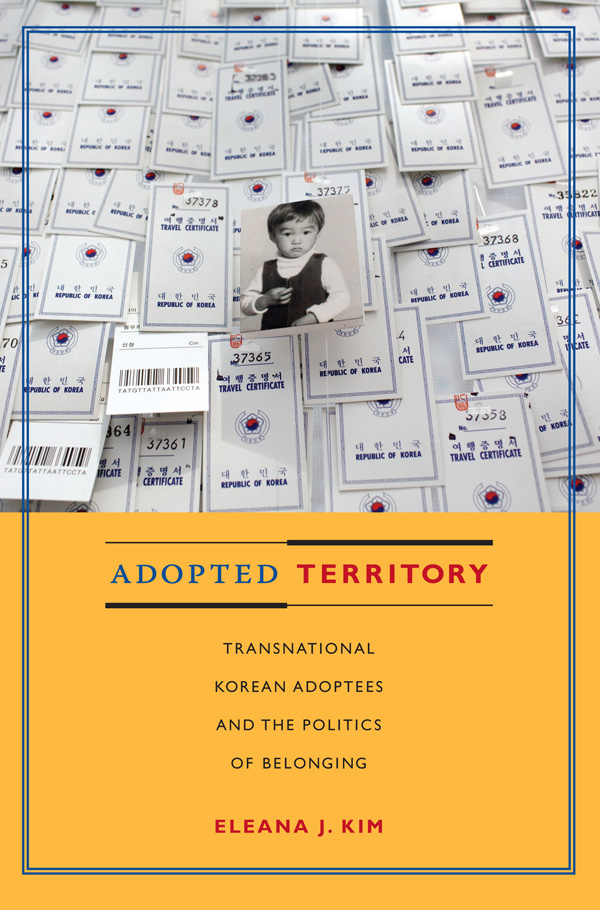
Adopted Territory: Transnational Korean Adoptees and the Politics of Belonging by Eleana J. Kim. I highly recommend this book if you are interested in Korean adoptees. Eleana Kim explores transnational Korean adoptees from an ethnographic perspective. From the publisher: Kim examines the history of Korean adoption, the emergence of a distinctive adoptee collective identity, and adoptee returns to Korea in relation to South Korean modernity and globalization.
Legacies of (un)belonging have historical roots and resonate across quite different contexts of transracial and transnational adoption. In Adoption across Race and Nation activists, adoptees, and scholars across a range of fields—history, childhood studies, cultural anthropology, gender studies, social policy, and more—ask: What are the experiences of dual-heritage adoptees, and how have configurations of kinship, culture, and identity shaped their lives? How have transnationally and transracially adopted children approached their Americanness, their American whiteness, their American Blackness, their Asian Americanness? How do “border crises” turn “adoptable children” into revenue streams for countries, exposing the vulnerability of immigrant families of color? Offering case studies of post–World War II and Cold War adoptions of Black German and Black Korean children, Adoption across Race and Nation probes the intersections of race and nation as well as immigration and citizenship. It thus demonstrates that in the past as well as today, adoption, nation, and race continue to operate as relational categories with immediate effects on normative notions of family and kinship, belonging, the role of the state, and social welfare.
Adoption and Multiculturalism features the voices of international scholars reflecting transnational and transracial adoption and its relationship to notions of multiculturalism. The essays trouble common understandings about who is being adopted, who is adopting, and where these acts are taking place, challenging in fascinating ways the tidy master narrative of saviorhood and the concept of a monolithic Western receiving nation. Too often the presumption is that the adoptive and receiving country is one that celebrates racial and ethnic diversity, thus making it superior to the conservative and insular places from which adoptees arrive. The volume’s contributors subvert the often simplistic ways that multiculturalism is linked to transnational and transracial adoption and reveal how troubling multiculturalism in fact can be. All of the editors are transracial, transnational adoptees.

In Adoption Fantasies, Kimberly D. McKee explores the ways adopted Asian women and girls are situated at a nexus of objectifications—as adoptees and as Asian American women—and how they negotiate competing expectations based on sensationalist and fictional portrayals of adoption found in US popular culture. McKee traces the life cycle of the adopted Asian woman, from the rendering of infant adoptee bodies in the white US imaginary, to Asian American fantasies of adoption, to encounters with the hypersexualization of Asian and Asian American women and girls in US popular culture. Drawing on adoption studies, Asian American studies, critical ethnic studies, gender studies, and cultural studies, McKee analyzes the mechanisms informing adoptees’ interactions with consumers of this media—adoptive parents and families and strangers alike—and how those exchanges and that media influence adoptees’ negotiations with the world. From Modern Family to Sex and the City to the notoriety surrounding Soon-Yi Previn and Woody Allen, among many other instances, McKee scrutinizes the fetishization and commodification of women and girls adopted from Asia to understand their racialized experiences. McKee is an adoptee.

Adoption in a Color-Blind Society by Pamela Anne Quiroz. From the publisher: Drawing also on popular adoption literature and information in the public domain, the book provides a critical interpretation of the discursive practices of private adoption and argues that despite the current discourse of equity in contemporary adoption, African American children continue to be marginalized as bargain basement deals. Color-blind individualism extends beyond the U.S. to our new global reality where children are simply another commodity within the transnational marketplace of adoption. Quiroz is an adoptive parent.

Adoptive Families in a Diverse Society edited by Katarina Wegar. This book is a collection of essays. From the publisher: Essays explore our current fascination with genetics, showing how our intense belief that we are produced, shaped, and controlled by our genes has affected the authenticity and value that we credit to adoptive parent/child relations. Other essays look at identity development, community attitudes toward adoption, gay adoptive fathers’ experiences, the ways in which single mother adoptive families create kinship, and the ways in which cultural assumptions about race and class operate in the system.
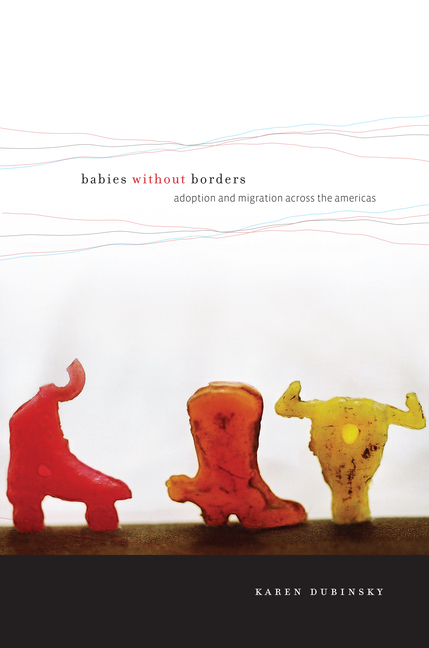
Babies Without Borders: Adoption and Migration across the Americas by Karen Dubinsky. This book delves into transnational adoption between North America and Latin America. From the publisher: Karen Dubinsky expands the historical record while she considers the political symbolism of children caught up in adoption and migration controversies in Canada, the United States, Cuba, and Guatemala…Drawing from archival research as well as from her critical observations as an adoptive parent, Dubinsky moves debates around transnational adoption beyond the current dichotomy—the good of “humanitarian rescue,” against the evil of “imperialist kidnap.”

Beyond Good Intentions: A Mother Reflects On Raising Internationally Adopted Children by Cheri Register. Another one I consider a basic litmus test for adoptive parents who adopted internationally. Register does a thorough job of walking parents through some common myths about intercountry adoption and parenting as a white parent of children of color. Register is an adoptive parent.

Birthmarks: Transracial Adoption in Contemporary America by Sandra Patton focuses mostly on transracial adoption of Black and multiracial Black children. From the publisher: Through in-depth interviews with adult transracial adoptees, as well as with social workers in adoption agencies, Sandra Patton [Imani], herself an adoptee, explores the social construction of race, identity, gender, and family and the ways in which these interact with public policy about adoption.

Blue-Ribbon Babies and Labors of Love: Race, Class, and Gender in U.S. Adoption Practice by Christine Ward Gailey is another important book that examines how adoption has been practiced, specifically looking at race, class and gender. As the publisher describes, this book “demonstrates that the ways adoptive parents speak about their children vary across hierarchies of race, class, and gender. She shows that adopters’ notions about their children’s backgrounds and early experiences, as well as their own “family values,” influence child rearing practices.” I highly recommend this book.
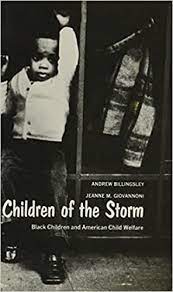
Children of the Storm: Black Children and American Child Welfare by Andrew Billingsley. This is one of the seminal books about African American children and the child welfare system. While this book does not exclusively focus on transracial adoption, it is an important contextual history of the systemic and cultural factors that influenced transracial adoptions. I consider this book, along with Dorothy Robert’s books about the child welfare system, must-reads for understanding the racialized practices that both created the need for, and responses to, transracial adoption of Black children.

Choosing Ethnicity, Negotiating Race: Korean Adoptees in America by Mia Tuan and Jiannbin Lee Shiao. I provided a review of this book here. Tuan and Shiao seek to understand how and in what ways Korean Americans identify themselves and how their identity/identities “are chosen, discarded, or revised over time (p.12). I especially appreciated that the authors problematized the adoptive parents’ “colorblind” mentality about adopting a child of color who was Asian.

Based on ethnographic fieldwork at a small Chicago adoption agency specializing in transracial adoption, Contingent Kinship charts the entanglement of institutional structures and ideologies of family, race, and class to argue that adoption is powerfully implicated in the question of who can have a future in the twenty-first-century United States. With a unique focus on the role that social workers and other professionals play in mediating relationships between expectant mothers and prospective adopters, Kathryn A. Mariner develops the concept of “intimate speculation,” a complex assemblage of investment, observation, and anticipation that shapes the adoption process into an elaborate mechanism for creating, dissolving, and exchanging imagined futures. Shifting the emphasis from adoption’s outcome to its conditions of possibility, this insightful ethnography places the practice of domestic adoption within a temporal, economic, and affective framework in order to interrogate the social inequality and power dynamics that render adoption—and the families it produces—possible. Mariner is an adoptee.
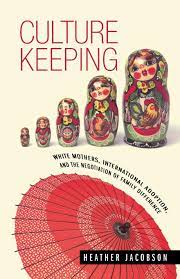
I refer to Culture Keeping: White Mothers, International Adoption, and the Negotiation of Family Difference by Heather Jacobson often in my research. Jacobson describes the ways mothers in particular are typically tasked with providing their children with information and activities that connect them to their countries of birth. In this book, Jacobson compares white adoptive mothers of Chinese adopted children and those of Russian adopted children (who often read as white) and the ways they integrate – or don’t – their child’s birth culture into their families.

Cultures of Transnational Adoption Edited by Toby Alice Volkman is an academic anthology. From the publisher: “The cultural experiences considered in this volume raise important questions about race and nation; about kinship, biology, and belonging; and about the politics of the sending and receiving nations. Several essayists explore the images and narratives related to transnational adoption. Others examine the recent preoccupation with “roots” and “birth cultures…Together, the contributors trace the new geographies of kinship and belonging created by transnational adoption.”

Since the Korean War began, Western families have adopted more than 200,000 Korean children. Two-thirds of these adoptees found homes in the United States. The majority joined white families and in the process forged a new kind of transnational and transracial kinship. Kimberly D. McKee examines the growth of the neocolonial, multi-million-dollar global industry that shaped these families—a system she identifies as the transnational adoption industrial complex. As she shows, an alliance of the South Korean welfare state, orphanages, adoption agencies, and American immigration laws powered transnational adoption between the two countries. Adoption became a tool to supplement an inadequate social safety net for South Korea’s unwed mothers and low-income families. At the same time, it commodified children, building a market that allowed Americans to create families at the expense of loving, biological ties between Koreans. McKee also looks at how Christian Americanism, South Korean welfare policy, and other facets of adoption interact with and disrupt American perceptions of nation, citizenship, belonging, family, and ethnic identity. McKee is an adoptee.

Over the last decade, nearly 200,000 children have been adopted into the United States, 25,000 of whom came from Guatemala. Finding Fernanda, a dramatic true story paired with investigative reporting, tells the side-by-side tales of an American woman who adopted a two-year-old girl from Guatemala and the birth mother whose two children were stolen from her. Each woman gradually comes to realize her role in what was one of Guatemala’s most profitable black-market industries: the buying and selling of children for international adoption. Finding Fernanda is an overdue, unprecedented look at adoption corruption—and a poignant, riveting human story about the power of hope, faith, and determination.

Inside Transracial Adoption (Second Edition) by Beth Hall is a book for adoptive parents. From the publisher: “Drawing on research, the authors’ decades of experience as adoption professionals, and their personal experience of adopting transracially, the book features real-life examples and strategies for success, and explores in depth the realities of raising a child transracially, whether in a multicultural or predominantly white community. Readers will learn how to help children build a strong sense of identity, so that they will feel at home both in their new family and in their racial group or culture of origin.” This is another book that demonstrates a white adoptive parent’s ability to see their adopted child’s perspective. Hall is an adoptive parent.

International Adoption: Global Inequalities and the Circulation of Children edited by Diana Marre and Laura Briggs is another academic anthology that focuses on intercountry/transnational adoption (with associated transracial adoption as part of ICA/TNA). From the book’s abstract: “Rather than focusing only on the United States, as much previous work on the topic does, this book considers the perspectives of a number of sending countries as well as other receiving countries, particularly in Europe. The book also reminds us that the United States also sends children into international adoptions—particularly children of color. The book thus complicates the standard scholarly treatment of the subject, which tends to focus on the tensions between those who argue that transnational adoption is an outgrowth of American wealth, power, and military might (as well as a rejection of adoption from domestic foster care) and those who maintain that it is about a desire to help children in need.” Briggs is an adoptive parent.
International Advances in Adoption Research for Practice edited by Gretchen Miller Wrobel and Elsbeth Neil is aimed toward professionals involved in aspects of adoption practice (including social workers, clinicians, and physicians). This book is an edited collection of 13 papers based on invited keynote presentations or paper symposia presentations given at the Second International Conference on Adoption Research (ICAR2) held in 2006 and provides cross-cultural perspectives of adoption from a worldwide, multidisciplinary community of adoption researchers. This would be a book for those interested in what the research community is focusing on in terms of adoption.

International Korean Adoption: A Fifty-year History of Policy and Practice by Kathleen Ja Sook Bergquist, M. Elizabeth Vonk, Dong Soo Kim and Marvin D. Feit is a compilation of research specifically about Korean adoption. Bergquist is a Korean adoptee and adoptive parent. From the publisher: “Through original research and personal accounts, this revealing text explores how Korean adoptees and their families fit into their family roles—and offers clear perspectives on adoption as child welfare practice. Global implications and politics, as well as the very personal experiences are examined in detail. This source is a one-of-a-kind look into the full spectrum of information pertaining to Korean adoption.” Bergquist is an adoptee and adoptive parent.

Invisible Asians: Korean American Adoptees, Asian American Experiences and Racial Exceptionalism by Kim Park Nelson is the most comprehensive oral history study of Korean adoptees. From the publisher: “Invisible Asians draws on the life stories of more than sixty adult Korean adoptees in three locations: Minnesota, home to the largest concentration of Korean adoptees in the United States; the Pacific Northwest, where many of the first Korean adoptees were raised; and Seoul, home to hundreds of adult adoptees who have returned to South Korea to live and work. Their experiences underpin a critical examination of research and policy making about transnational adoption from the 1950s to the present day.” Park Nelson is an adoptee.

Since the early 1950s, over 125,000 Korean children have been adopted in the United States, primarily by white families. Korean adoptees figure in twenty-five percent of US transnational adoptions and are the largest group of transracial adoptees currently in adulthood. Despite being legally adopted, Korean adoptees’ position as family members did not automatically ensure legal, cultural, or social citizenship. Korean adoptees routinely experience refusals of belonging, whether by state agents, laws, and regulations, in everyday interactions, or even through media portrayals that render them invisible. In Out of Place, SunAh M Laybourn, herself a Korean American adoptee, examines this long-term journey, with a particular focus on the race-making process and the contradictions inherent to the model minority myth. Drawing on in-depth interviews with Korean adoptee adults, online surveys, and participant observation at Korean adoptee events across the US and in Korea, Out of Place illustrates how Korean adoptees come to understand their racial positions, reconcile competing expectations of citizenship and racial and ethnic group membership, and actively work to redefine belonging both individually and collectively. In considering when and how Korean adoptees have been remade, rejected, and celebrated as exceptional citizens, Out of Place brings to the fore the features of the race-making process.

Outsiders Within: Writing on Transracial Adoption edited by Jane Jeong Trenka, Julia Chinyere Oparah and Sun Yung Shin is an anthology largely by adoptees, with selected other scholars or writers with additional expertise. From the publisher: “While transracial adoption tends to be considered benevolent, it often exacts a heavy emotional, cultural, and economic toll on those who directly experience it. Outsiders Within is a landmark publication that carefully explores this most intimate aspect of globalization through essays, fiction, poetry, and art.” A note that several interviews with deeper discussions about the book by contributors (including myself) are available here. All of the editors are adoptees.

Outsourced Children: Orphanage Care and Adoption in Globalizing China by Leslie K. Wang. This book importantly connects the practice of intercountry adoption in China to a larger conversation of the ways in which children serve as a way both Chinese and American/U.S. governments implement their moral influence in a globalized world. Wang’s ethnography highlights the forms of “outsourced intimacy” used to both prepare children as “adoptable” for foreign parents as well as to care for children with disabilities who will likely remain institutionalized.

While focused on serving children and families, the adoption industry must also generate sufficient revenue to cover an agency’s operating costs. With its fee-for-service model, Elizabeth Raleigh asks, How does private adoption operate as a marketplace? Her eye-opening book, Selling Transracial Adoption, provides a fine-grained analysis of the business decisions in the adoption industry and what it teaches us about notions of kinship and race. Adoption providers, Raleigh declares, are often tasked with pitching the idea of transracial adoption to their mostly white clientele. But not all children are equally “desirable,” and transracial adoption—a market calculation—is hardly colorblind. Selling Transracial Adoption explicitly focuses on adoption providers andemploys candid interviews with adoption workers, social workers, attorneys, and counselors, as well as observations from adoption conferences and information sessions, toillustrate how agencies institute a racial hierarchy—especially when the supply of young and healthy infants is on the decline. Ultimately, Raleigh discovers that the racialized practices in private adoption serve as a powerful reflection of race in America. Raleigh is an adoptee.
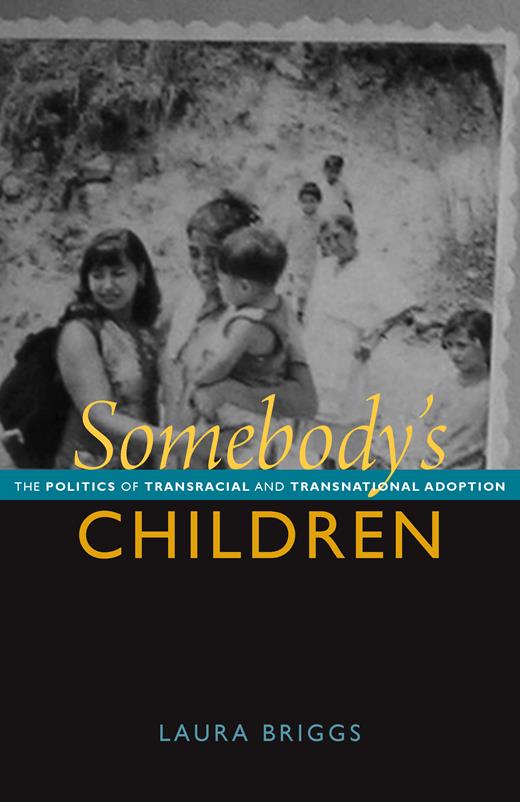
Somebody’s Children: The Politics of Transracial and Transnational Adoption by Laura Briggs is a response to Elizabeth Bartholet’s book, Nobody’s Children. Historian Briggs counters the ideologies that adopted children are unwanted by their families of origin and argues that transracial and transnational adoption occur through larger systemic and cultural values about deserving and undeserving parents – especially women. Briggs describes the ways communities are coerced or forced to “give up” their children and the costs to those communities as a result. Briggs is an adoptive parent.
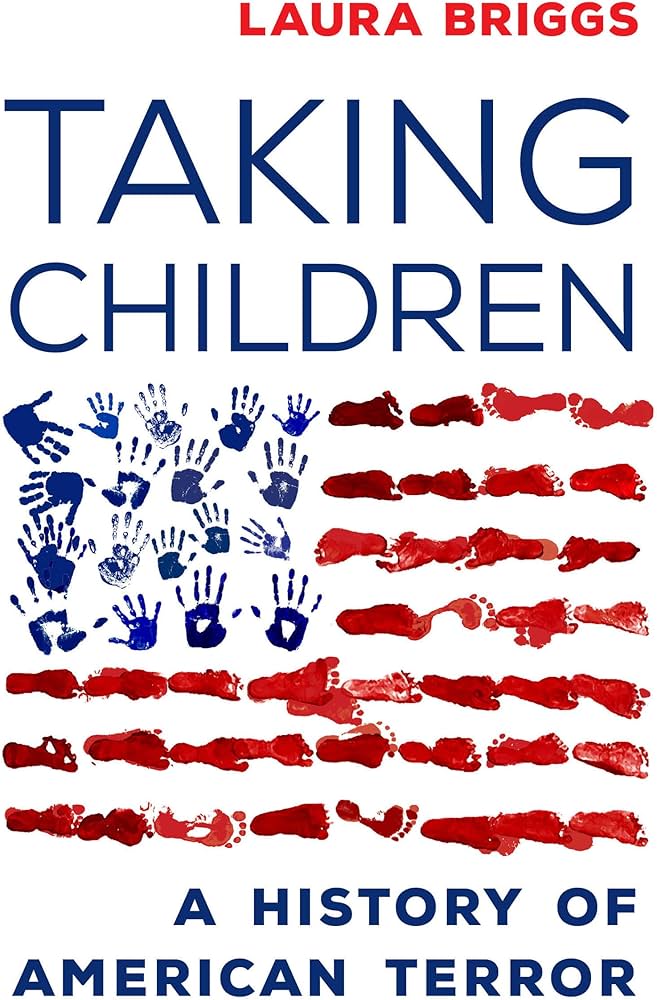
Taking Children argues that for four hundred years the United States has taken children for political ends. Black children, Native children, Latinx children, and the children of the poor have all been seized from their kin and caregivers. As Laura Briggs’s sweeping narrative shows, the practice played out on the auction block, in the boarding schools designed to pacify the Native American population, in the foster care system used to put down the Black freedom movement, in the US’s anti-Communist coups in Central America, and in the moral panic about “crack babies.” In chilling detail we see how Central Americans were made into a population that could be stripped of their children and how every US administration beginning with Reagan has put children of immigrants and refugees in detention camps. Yet these tactics of terror have encountered opposition from every generation, and Briggs challenges us to stand and resist in this powerful corrective to American history. Briggs is an adoptive parent.

The Ethics of Transracial Adoption by Hawley Fogg-Davis is not my favorite, but thought-provoking and challenging. From the publisher: “Fogg-Davis’s argument in favor of transracial adoption is based on the moral and legal principle of nondiscrimination and a theory of race-consciousness she terms “racial navigation.” Challenging the notion that children “get” their racial identity from their parents, she argues that children, through the process of racial navigation, should cultivate their self-identification in dialogue with others.”

The Kinning of Foreigners: Transnational Adoption in a Global Perspective by Signe Howell. From the publisher: “Based on empirical research from Norway, the author identifies three main themes for analysis: Firstly, by focusing on the perceived relationship between biology and sociality, she examines how notions of child, childhood and significant relatedness vary across time and space. She argues that through a process of kinning, persons are made into kin. In the case of adoption, kinning overcomes a dominant cultural emphasis placed upon biological connectedness.”
The Lost Daughters of China: Adopted Girls, Their Journey to America, and the Search for a Missing Past by Karin Evans. Evans is a journalist and adoptive parent and this book explores her research into the policies and cultural factors that led to the Chinese adoption phenomenon and offers insight into her own process of adopting. I have not read the updated second edition which from the publisher’s note says includes more perspectives from Chinese adoptees themselves.

I highly highly recommend To Save the Children of Korea: The Cold War Origins of International Adoption by Arissa Oh for anyone interested in Korean adoption – especially Korean adoptees. Oh’s research into the cultural and political factors both in the U.S. and in South Korea is a must-read for those who, like myself, wondered how it was possible for a child in South Korea to end up in a white family in the U.S. with no connections to Asian, much less Korean, knowledge or community. This book is additionally important since South Korean adoption served as a template for transnational adoption in the U.S.

The Traffic in Babies: Cross-Border Adoption and Baby-Selling between the United States and Canada, 1930-1972 by Karen Balcom. This book offers a fascinating look into the exchange of children across the U.S and Canada, a practice many people have not considered as transnational adoption. From the publisher: Between 1930 and the mid-1970s, several thousand Canadian-born children were adopted by families in the United States. At times, adopting across the border was a strategy used to deliberately avoid professional oversight and take advantage of varying levels of regulation across states and provinces.”

Transnational Adoption: A Cultural Economy of Race, Gender, and Kinship by Sara Dorow was one of the first research books I read and I refer to this book often. Dorow explored many different perspectives in this ethnography and I particularly refer to her notion of adoptees as “client, ambassador, and gift” (see this post). I recommend reading this book in tandem with the books written by Karin Evans and Kay Ann Johnson to provide additional context for the more personal, adoptive parent perspective (Dorow is not an adoptive parent).

Transracial Adoption and Foster Care is an older book by Dr. Joseph Crumbley and published by the Child Welfare League of America and is aimed toward practitioners working with foster and adopted children and their families. From the publisher, this book focuses on specific ways that practitioners can work with transracial adoptive and foster families to ensure that children develop positive racial and cultural identities; how practitioners might better serve transracial families; and professionals’ concerns, such as cultural competence and recruitment.
Wanting a Daugher, Needing a Son: Abandonment, Adoption, and Orphanage Care in China by Kay Ann Johnson was the first one I read about Chinese adoptions. Johnson conducted research for this book in China and is an adoptive parent. From the publisher’s description: Johnson untangles the complex interactions between these social practices and the government’s population policies. She also documents the many unintended consequences, including the overcrowding of orphanages that led China to begin international adoptions. Johnson also wrote China’s Hidden Children about the Chinese families who relinquished children, which I have not read.
Immersive journalism of the highest order, Roxanna Asgarian’s We Were Once a Family is a revelation of precarious lives; it is also a shattering exposé of the foster care and adoption systems that produced this tragedy. As a journalist in Houston, Asgarian sought out the children’s birth families and put them at the center of the story. We follow the lives of the Harts’ adopted children and their birth parents, and the machinations of the state agency that sent the children far away. Asgarian’s reporting uncovers persistent racial biases and corruption as young people of color are separated from birth parents without proper cause. The result is a riveting narrative and a deeply reported indictment of a system that continues to fail America’s most vulnerable children while upending the lives of their

White Parents, Black Children: Experiencing Transracial Adoption by Darron Smith, Cardell Jacobson and Brenda Juarez is a research-based book. Smith and colleagues interviewed both Black adoptees and White adoptive parents. From the publisher: White Parents, Black Children argues that racism remains a factor for many children of transracial adoptions. Black children raised in white homes are not exempt from racism, and white parents are often naive about the experiences their children encounter. This book aims to bring to light racial issues that are often difficult for families to talk about, focusing on the racial socialization white parents provide for their transracially adopted children about what it means to be black in contemporary American society.
ADOPTION BOOKS – UNDERSTANDING ADOPTION (DEVELOPMENTAL AND PSYCHOLOGICAL)

A Child’s Journey Through Placement by Vera Fahlberg. A classic that really takes a developmental view of the child in care from removal from the home to adoption. When I teach child welfare or permanency/adoption courses, this is required reading.

Adoption Healing …a path to recovery by Joe Soll. A favorite among many adoptees. Overview from book description: In this unique book, the reader is provided with a description of the unfolding of the adoptee’s personality from birth, detailing each developmental milestone along the way, followed by different methods of healing the adoptee’s wounds, including inner child work, visualizations, healing affirmations, and anger management. Every chapter includes a Myths and Realities of adoption section, a summary of the chapter and exercises to do on one’s own. Soll is an adoptee.

Ambiguous Loss: Learning to Live with Unresolved Grief by Pauline Boss. A terrific book to help people understand one of the important topics I think everyone who is involved with adoption needs to know – ambiguous loss. This is the original text and while adoption is only a small part of the book, it is foundational for understanding the complexity and ambiguity that adoptees and birth/first parents live with.
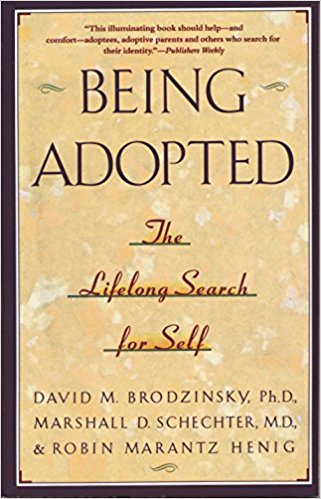
Being Adopted: The Lifelong Search for Self by David M. Brodzinsky. Another classic, this book is required reading for professionals who are working with adoptive parents and adopted children and adults. The authors take a developmental perspective, juxtaposing Erikson’s stages of psychosocial development along with the additional developmental tasks for adoptees.

Beneath the Mask: Understanding Adopted Teens. Publisher description: Adoption influences and intensifies the normal developmental tasks adolescents must accomplish (e.g. separation from parents, identity formation, decisions relating to sexuality, etc.) Both at home and at school, struggles related to this extra layer of challenges can trigger mild and sometimes serious emotional/ behavioral issues for adopted teens from ALL adoptive backgrounds, especially those who are being raised by parents of a different race or culture. Riley is an adoptive parent.

Coming Home to Self: The Adopted Child Grows Up by Nancy Newton Verrier. Publisher description: Coming Home to Self is a book about becoming aware. It is written for all members of the adoption triad: adoptees, birth parents, and adoptive parents as well as those who are in relationship with them, including professionals. It explains the influence imprinted upon the nuerological system and, thus, on future functioning. It explains how false beliefs create fear and perpetuate being ruled by the wounded child. It is a book which will help adoptees discover their authentic selves after living without seeing themselves reflected back all their lives. Verrier is an adoptive parent.
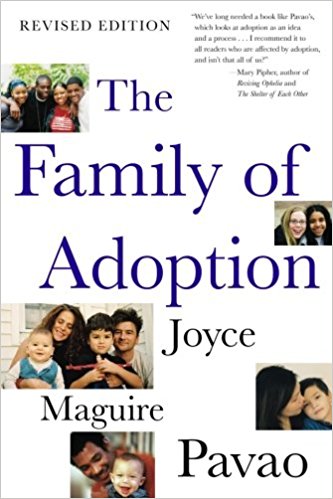
The Family of Adoption by Joyce McGuire Pavao. A terrific book for professionals and therapists who are working with adoptive parents and adopted children and adults. Pavao is an adoptee and brings a much-needed adoptee perspective. Pavao brings a developmental perspective to the adoption experience.

Helping Children Cope with Separation and Loss by Claudia Jewett Jarratt. Jewett has written a number of books that I highly recommend for any social worker or adoption worker and this is one of the “required reading” texts I’d suggest.
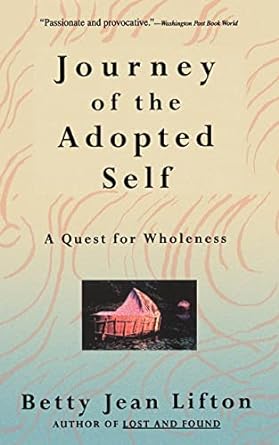
Journey Of The Adopted Self: A Quest For Wholeness by Betty Jean Lifton. Publisher description: Betty Jean Lifton, whose Lost and Found has become a bible to adoptees and to those who would understand the adoption experience, explores further the inner world of the adopted person. She breaks new ground as she traces the adopted child’s lifelong struggle to form an authentic sense of self. And she shows how both the symbolic and the literal search for roots becomes a crucial part of the journey toward wholeness. Lifton is an adoptee.
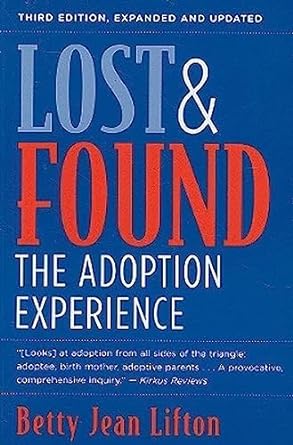
Lost and Found: The Adoption Experience by Betty Jean Lifton. One of the first adoption books I read. Publisher Note: The first edition of Betty Jean Lifton’s Lost and Found advanced the adoption rights movement in this country in 1979, challenging many states’ policies of maintaining closed birth records. For nearly three decades the book has topped recommended reading lists for those who seek to understand the effects of adoption—including adoptees, adoptive parents, birth parents, and their friends and families. This expanded and updated edition, with new material on the controversies concerning adoption, artificial insemination, and newer reproductive technologies, continues to add to the discussion on this important topic. A new preface and afterword by the author have been added, as well as a greatly expanded resources section that in addition to relevant organizations now lists useful Web sites. Lifton is an adoptee.
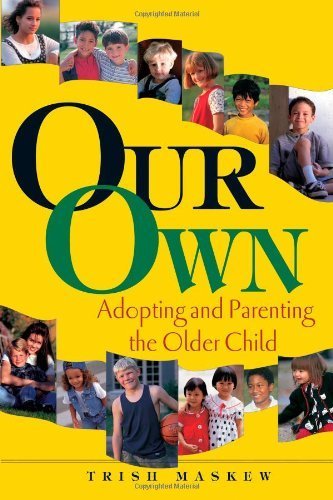
Our Own: Adopting and Parenting the Older Child by Trish Maskew. Publisher description: Based on the author’s experiences as an adoptive mother and foster parent, as well as interviews with numerous adoptive families, adoption professionals and adults who were adopted, Our Own thoroughly explores both the joys and the challenges of older child adoption. Maskew is an adoptive parent.

Shared Fate: A Theory and Method of Adoptive Relationships by H. David Kirk. Publisher description: Continuing to challenge a pervasive mystique about adoption, the important second edition belongs in every library and with every adoptive family. Based on research with more than 2,000 families, this pioneering work on modern adoption emphasizes open communication as the key to successful resolution of the adoptive family’s unique role and tasks. Its findings have stood the test of time. Although new forms of adoption have emerged and become numerically dominant, the book’s findings remain pertinent.

The Children Who Lived: Using Harry Potter and Other Fictional Characters to Help Grieving Children and Adolescents by Kathryn Markell and Marc Markell. Personally, I found this book very helpful and a starting point to think of how to use media stories of grieving children. Although this book uses Harry Potter as an example, I suggest you use this as a starting point. I like using superhero characters as examples.

The Primal Wound: Understanding the Adopted Child by Nancy Verrier. A controversial book. Many adoptees and adoptive parents resonate with Verrier’s ideas. Publisher’s description: The Primal Wound is a seminal work which revolutionizes the way we think about adoption. It describes and clarifies the effects of separating babies from their birth mothers as a primal loss which affects the relationships of the adopted person throughout life.. It is a book about pre-and perinatal psychology, attachment, bonding, and loss. It gives adoptees, whose pain has long been unacknowledged or misunderstood, validation for their feelings, as well as explanations for their behavior. It lists the coping mechanisms which adoptees use to be able to attach and live in a family to whom they are not related and with whom they have no genetic cues. It will contribute to the healing of all members of the adoption triad and will bring understanding and encouragement to anyone who has ever felt abandoned. Verrier is an adoptive parent.

The Psychology of Adoption. Edited by David Brodzinsky and Marshall D. Schecter. Publisher description: In this work, David Brodzinsky, who has conducted one of the largest studies of adopted children, along with Marshall Schechter, a child psychiatrist, has brought together a group of leading researchers from various disciplines to explore the complex, interdisciplinary subject of adoption. Theoretical, empirical, clinical, and social policy issues offer new insights into the problems facing parents of adopted children and especially the children themselves. The book is a comprehensive study and will be of interest to child psychiatrists, developmental and clinical psychologists, social workers, and social service providers. Brodzinsky is a step-adoptive parent.

The Road to Evergreen: Adoption, Attachment Therapy, and the Promise of Family by Rachael Stryker. A fascinating ethnographic study of the attachment industry, centered on the geographic location where controversial attachment therapies emerged. Any professional who is interested in attachment therapy needs to read this book. I highly recommend this one.
BIRTH/FIRST PARENT PERSPECTIVES
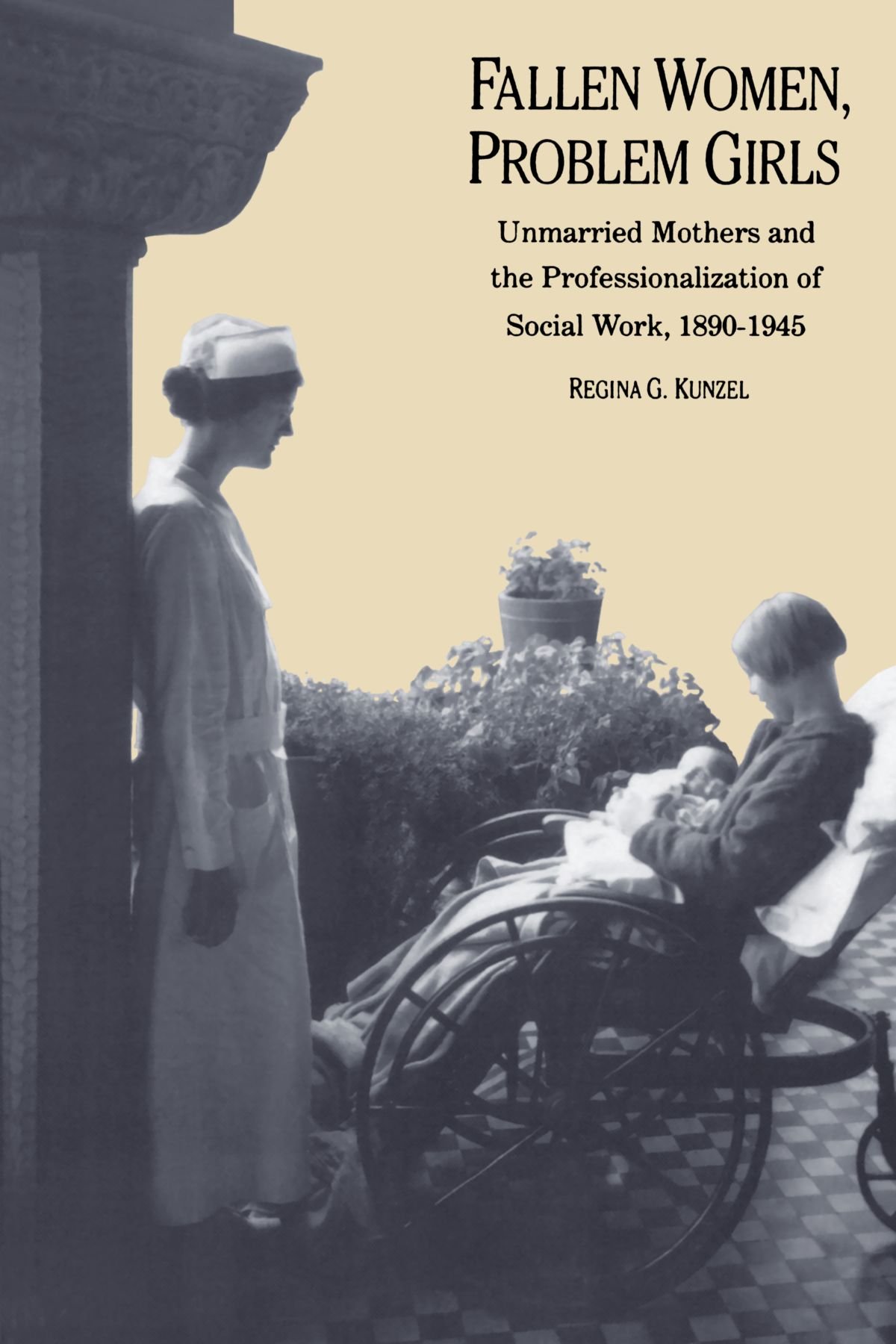
Fallen Women, Problem Girls: Unmarried Mothers and the Professionalization of Social Work, 1890-1945 by Regina G. Kunzel. One of my favorite books about adoption practices. Kunzel documents the history of maternity homes and the ways in which unmarried pregnant white girls and women were treated and the social and cultural values that led to the increase in the use of maternity homes for young women. This book also chronicles the change from seeing unmarried pregnant women as “victims” to viewing their fetuses/children as victims. This should be required reading for any social worker who wants to work in adoptions.

The Girls Who Went Away: The Hidden History of Women Who Surrendered Children for Adoption in the DecadesBefore Roe v. Wade by Ann Fessler. A terrific book containing personal stories from the oral histories of women who placed children from maternity homes. Fessler also made the film, A Girl Like Her which makes the stories really come alive. Consider this the companion to Fallen Women, Problem Girls by Regina Kunzel. Fessler is an adoptee.

Adoption has always been viewed as a beloved institution for building families, as well as a mutually agreeable common ground in the abortion debate, but little attention has been paid to the lives of mothers who relinquish infants for private adoption. Relinquished reveals adoption to be a path of constrained choice for those for whom abortion is inaccessible, or for whom parenthood is untenable. The stories of relinquishing mothers are stories about our country’s refusal to care for families at the most basic level, and to instead embrace an individual, private solution to a large-scale, social problem. With the recent decision in Dobbs v. Jackson Women’s Health Organization revoking abortion protections, we are in a political moment in which adoption is, increasingly, being revealed as an institution devoted to separating families and policing parenthood under the guise of feel-good family-building. Rooted in a long-term study, Relinquished features the in-depth testimonies of American mothers who placed their children for domestic adoption. The voices of these women are powerful and heartrending; they deserve to be heard.
ADOPTION BOOKS – ANTHOLOGIES

Once They Hear My Name: Korean Adoptees and Their Journeys Toward Identity (Edited by Ellen Lee, Marilyn Lammert and Mary Ann Hess).The reason I did not include this anthology of adoptee stories with the other anthologies in the adoptee authored page is because none of the editors are adoptees. However I recommend this book for the stories that adoptees share about their experiences.
SEARCH AND REUNION
Adoption Reunions: A Book for Adoptees, Birth Parents and Adoptive Families by Michelle McColm. Publisher description: In this practical book, Michelle McColm takes the adoptee and birth parent carefully through the process of adoption reunion; drawing on extensive interviews and the experience of her own reunion.

Birthright: The Guide to Search and Reunion for Adoptees, Birthparents, and Adoptive Parents by Jean A. S. Strauss. I’m a fan of Jean Strauss’ films – especially The Triumirate. Publisher description: What happens when an adoptee decides to locate a birthparent or a birthparent wants to find a child given up long ago? How does one search for people whose names one does not know? And what happens during a reunion? In 1983, Jean A. S. Strauss was faced with these questions when she began her search for her birthmother, and in this inspiring new handbook, she shares her experience. Strauss will help you throughout this significant time. Brimming with important reference sources and dozens of true-life stories, this valuable resource will guide you in: Making the difficult decision to search, Navigating through the emotional turbulence of a reunion and Dealing with the impact of the search on the adoptive parents. Compassionate and insightful, Birthright is for anyone seeking to connect with someone long lost. Strauss is an adoptee.
In Reunion: Transnational Korean Adoptees and the Communication of Family by Sara Docan-Morgan. “Do you know your real parents?” is a question many adoptees are asked. In In Reunion, Sara Docan-Morgan probes the basic notions of family, adoption, and parenthood by exploring initial meetings and ongoing relationships that transnational Korean adoptees have had with their birth parents and other birth family members. Drawing from qualitative interviews with adult Korean adoptees in the United States and Denmark, as well as her own experiences as an adoptee, Docan-Morgan illuminates the complexities of communication surrounding reunion. The paradoxes of adoption and reunion—shared history without blood relations, and blood relations without shared history—generate questions: What does it mean to be “family”? How do people use communication to constitute family relationships? How are family relationships created, maintained, and negotiated over time? In Reunion details adoptive and cultural identities, highlighting how adoptees often end up shouldering communicative responsibility in their family relationships. Interviews reveal how adoptees navigate birth family relationships across language and culture while also attempting to maintain relationships with their adoptive family members. Docan-Morgan is an adoptee.

The Adoption Reunion Handbook by Elizabeth Trinder. Publisher description: The book describes the experiences that people have had when tracing their birth parents, as well as offering practical advice on how to go about searching and what to expect emotionally. Each section has an advice box which summarizes key points, notes issues to pay particular attention to, or offers draft letters that readers can adapt for their own needs. The appendix contains useful addresses and weblinks, and includes checklists for searching and for the reunion. Chapters include reunion with birth fathers and birth siblings, as well as with birth mothers, the relationship with the adoptive family and dealing with reunions that break down.

The Adoption Reunion Survival Guide: Preparing Yourself for the Search, Reunion, and Beyond by Julie Jarrell Bailey. Publisher description: A sensitive guide to the adoption process uses real-life stories to prepare adoptees for the often turbulent process of a reunion with birth parents and includes a list of valuable resources to help readers with their search, support groups, and Web sites.
RAISING CHILDREN OF COLOR
Children’s and Young Adult Books

Shannon Gibney: See No Color by Shannon Gibney. Publisher description: For as long as she can remember, sixteen-year-old Alex Kirtridge has known two things about herself: She’s a stellar baseball player. She’s adopted. Alex has had a comfortable childhood in Madison, Wisconsin. Despite some teasing, being a biracial girl in a wealthy white family hasn’t been that big a deal. What mattered was that she was a star on the diamond, where her father, a former Major Leaguer, coached her hard and counted on her to make him proud. But now, things are changing: she meets Reggie, the first black guy who’s wanted to get to know her; she discovers the letters from her biological father that her adoptive parents have kept from her; and her changing body starts to affect her game. Suddenly, Alex begins to question who she really is. She’s always dreamed of playing pro baseball just like her father, but can she really do it? Does she truly fit in with her white family? Who were her biological parents? What does it mean to be black? If she’s going to find answers, Alex has to come to terms with her adoption, her race, and the dreams she thought would always guide her.
Ola Zuri: Why Can’t You Look Like Me? (English and French Edition). Publisher description: Follow along on a young girl’s journey as she wonders Why Can t You Look Like Me of those around her. She is a young girl who was adopted and feels like she doesn’t fit in, sometimes even in her own family. This tender book shows how seeing others that look like you can give a child the inner strength to believe in himself/herself and not only on what others may say.
Ola Zuri: Where Do I Belong? (English and French Edition). Publisher description: The story is about a young boy who was adopted transracially and feels that something in his family isn’t quite right. He wonders and worries about where he fits and where he belongs. Follow him as he soon discovers the answers.
Rose Kent: Kimchi & Calamari. Publisher description: Kimchi and calamari. It sounds like a quirky food fusion of Korean and Italian cuisine, and it’s exactly how Joseph Calderaro feels about himself. Why wouldn’t an adopted Korean drummer—comic book junkie feel like a combo platter given (1) his face in the mirror(2) his proud Italian family. And now Joseph has to write an essay about his ancestors for social studies. All he knows is that his birth family shipped his diapered butt on a plane to the USA. End of story. But what he writes leads to a catastrophe messier than a table of shattered dishes—and self-discovery that Joseph never could have imagined.
Joan McNamara: Borya and the Burps: An Eastern European Adoption Story. Publisher description: When baby Borya is adopted by a kind Mamma-and-Papa, he leaves his Eastern European orphanage, taking nothing familiar with him except his talent for burping.
Lisa Railsback: Betti on the High Wire. Publisher description: Ten-year-old Babo has grown up on an abandoned circus camp in a war-torn country, believing her circus-star parents will come back any day now. So she’s none too happy when an American couple adopts her, calls her Betti, and takes her away from her fellow parentless friends, to a very confusing America. Betti misses her old home, and she’s worried her real parents will never be able to find her. She’s determined to run away, but as she gets to know her new parents, little sister, and even a new friend, Betti starts to feel like maybe she could be happy in her new American home.

When We Become Ours: A YA Adoptee Anthology edited by Shannon Gibney and Nicole Chung. Publisher description: There is no universal adoption experience, and no two adoptees have the same story. This anthology for teens edited by Shannon Gibney and Nicole Chung contains a wide range of powerful, poignant, and evocative stories in a variety of genres. These tales from fifteen bestselling, acclaimed, and emerging adoptee authors genuinely and authentically reflect the complexity, breadth, and depth of adoptee experiences.This groundbreaking collection centers what it’s like growing up as an adoptee. These are stories by adoptees, for adoptees, reclaiming their own narratives.
 Harlow's Monkey