A few months ago, conservative Christian political commentator David French was featured on The Fifth Column podcast, sharing about the racism his Ethiopian adopted daughter has experienced. He describes being “naive” and how witnessing the racist response to his family in the U.S. “soured him.” I guess I was living under a rock because I didn’t know French had a transracially adopted child. Then again, there are so many well-known writers, politicians, and celebrities who adopted, I can’t always keep up. This essay is not meant to be yet another attack on French as an individual person or as an adoptive parent. I want to situate French’s own stated words (written and in interviews) to the broader societal ideologies and narratives about race, adoption, politics, and power.

I read French’s essay in The Atlantic, an interview he did with Rachel Martin at NPR in 2018, and watched The Fifth Column podcast. French’s Christian beliefs informed his decision to adopt. He begins with the often-quoted, favorite of the Christian Alliance for Adoption crowd, James 1:27 Bible verse about caring for widows and orphans (and sidenote, most adoptive parents conveniently leave out the “widows” part of this verse). Also, like many white Christian Americans, French and his wife felt entitled to adopt a child of color. As he wrote, “my wife and I not only felt called to adopt, but we believed that race was no barrier to unity for a family of genuine faith.”
I couldn’t help but apply the adoptee consciousness model in part to French, especially when he describes how shocked and unprepared he was to be subject to criticism for what he and his wife believed was an unquestionably good act. Like most of society, he was deep in the status quo touchstone when he chose to adopt. The pushback from “both sides” served as a disrupting reality for him.
French often begins his stories about adopting by sharing the criticisms his family received by the “left,” especially the critiques that because he and his wife are white, they couldn’t parent a Black child, which he wholeheartedly rejects. He starts his Atlantic essay with the pushback from the “left” by citing two progressive obstacles – first, the Obama administration (i.e., a liberal administration) is blamed for the IRS’s audit of adoptive families who claimed the adoption tax credit. He then cites Kathryn Joyce’s book, The Child Catchers, which he describes as “a blistering attack on the evangelical adoption movement.” Only then does French describe the online attacks from the “right” which were so extreme he tells Martin “at least progressive critics didn’t want my daughter to die.” He says the comments came from “alt-right” white nationalists and white supremacists.
I want to point out two main problems with the way French presents his reactions to criticism. First, let’s go back to his comment that he “believed that race was no barrier to unity for a family of genuine faith.” I’m making a guess here that he was referring to his own overconfident opinion that his Christian faith alone signaled he is not-racist, and not that he thinks folks with disingenuous faith (or no faith) might have more barriers to “unity”. Also, let’s unpack this idea of “unity.” I think he is describing family unity here, so then is adopting a Black, Ethiopian child into an all-white family assumed to not be a barrier to that unity? It’s likely he also kind of conflates family unity for a broader statement about racial unity. But again, bringing one Black person into an all-white environment doesn’t exactly read as “unity” to me, just as a speck of black pepper in a glass of milk doesn’t imply any kind of honest integration. If nothing else, that black pepper just stands out more.
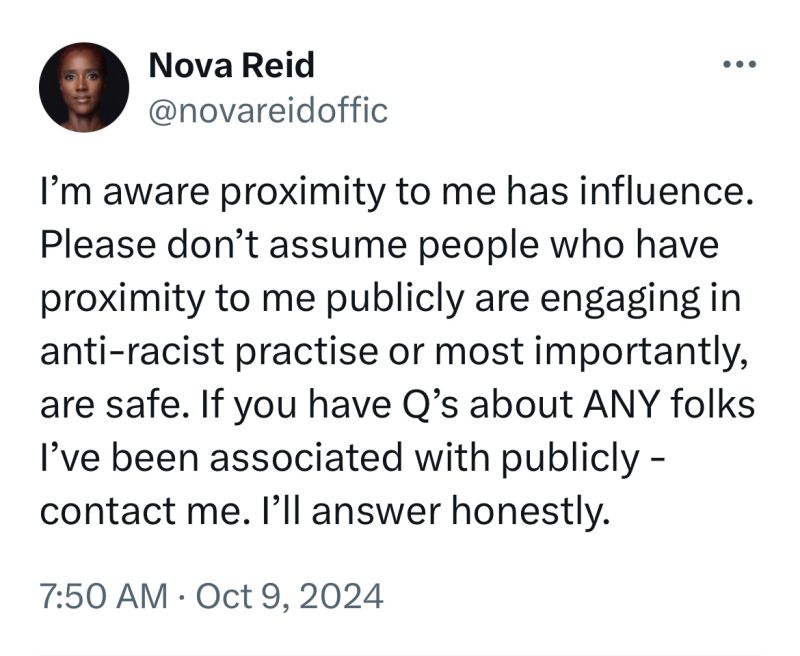
Further, being a Christian and practicing Christianity is not equal to being anti-racist. There are plenty of Christians of color who can provide examples of the racism they’ve encountered from White Christians. Just because you know, like, appreciate, or even love a person of color doesn’t mean you are anti-racist. Austin Channing Brown has a specific call-out for White Christians in her book, I’m Still Here to stop using their relational proximity to people of color as evidence of their “not-racism” (she also discusses relational proximity in this podcast with Brené Brown). Being “nice” to a person of color doesn’t mean you’re not racist, especially if you endorse or advocate for racist policies, narratives, and practices. Just like Amy Coney Barrett can love their adopted Black Haitian children through an individual lens and simultaneously promote policies that disenfranchise the Black community, like the recent ruling dismantling the Voting Rights Act. White adoptive parents can, and often do, emotionally and physically separate their child of color from their child’s broader community. This is why one of the tenets of my transracial adoption justice framework is “caring about transracial adoptees’ communities of origin.”
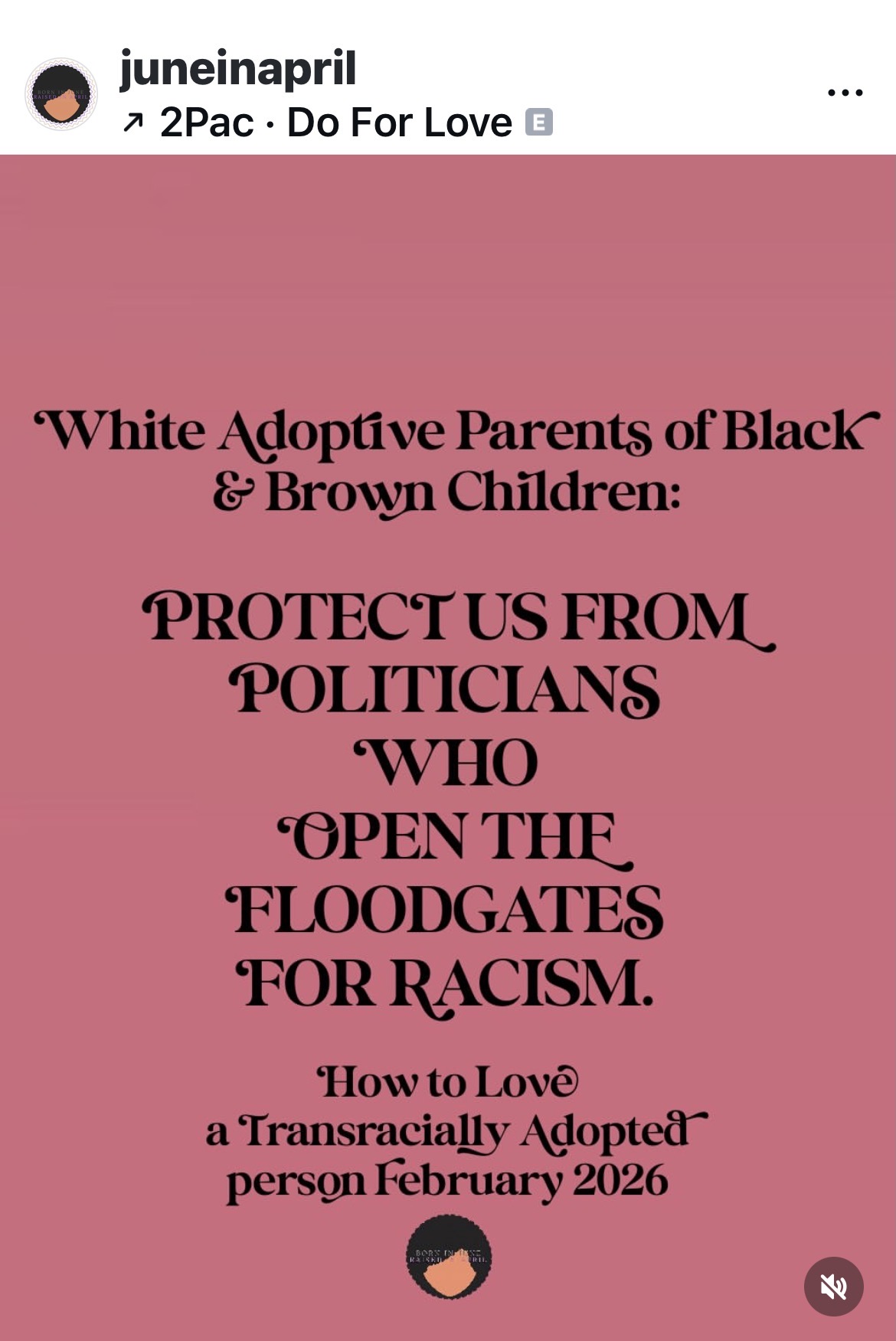
My second main critique is French’s comparison of the attacks on his family from white supremacists to those from “the left” as equivalent. He could have made the point that in 2012 the IRS conducted an aggressive audit on folks who claimed the adoption tax credit. Did the IRS only audit conservative Republican and Christian families? French certainly thinks so, as he opined in this essay. Why else would he describe this as an initiative under the Obama administration, if not to hint to a partisan “left” motive? Like many defensive white adoptive parents, French also regurgitates the National Association of Black Social Worker’s 1972 position statement to prove his point. Both examples are presented as progressive/liberal government and societal identity politics oppressing his family’s using the “reverse racism” trope, which is when White people claim to be victims of race-based policies or ideologies.
He could have and should have gone further to distinguish between the types of criticism his family was receiving. Much of the critique from progressives were related to the fact White parents are often challenged to support the racial and ethnic identity of their child of color. I mean, French raised his Black daughter in a predominantly White community. So, critique from progressives centered on his ability as a White parent to affirm the racial and ethnic identity of his Black child. When he says, “at least progressive critics didn’t want my daughter to die” he acknowledges the difference in the response to adopting a Black child – progressives want his child to thrive in her Blackness, white nationalists want his child to no longer exist. This doesn’t seem like an equal response at all.
I do empathize with French. For so many white adoptive parents with a genuine lack of consciousness about the reality of what transracial adoptees face, if they can confront it, is a shock. That’s because we don’t truly, as a society, confront the absolute audacious entitlement White folks have about their right to adopt children of color. I am glad that French recognizes the seriousness of racism. That it took his daughter being called racial slurs constantly throughout her childhood for this change – I just immediately feel pain and heartache that her trauma was a catalyst for him to reassess his racist beliefs.
In the NPR interview, French starts by saying he “thought it was important to give people my worldview” and I thought, once again, an adoptive parent centered his story and experience and felt compelled to share the story of their family’s adoption, sharing details about her (like her first family, her health, her developmental delays). This is what is being called “sharenting.” At the time of his 2018 interview, his daughter was ten years old. French tells Martin he and his wife protect her from “the online criticism.”
Naomi French is now 18, if I’ve done the math right. When I listened to the podcast interview, I wondered how Naomi might find herself someday moving through the Adoptee Consciousness Model. Does having a famous parent who overshares about her life in service of his own help or hinder her own adoptee consciousness development? Will Naomi feel she has the freedom to have different thoughts, feelings, and opinions about adoption from her parents? And at some point, the online critiques and attacks are going to be available for her to see. Naomi will have to navigate this as an adult. Her parents can’t keep this from her forever.
In several research studies I’ve conducted transracial adoptees share the racism they experienced growing up in predominantly white families and environments, and how much this was heightened during times of racial crisis (the 2016 and 2024 elections; the murders of Trayvon Martin, George Floyd, Sandra Bland and countless others; January 6th; the blame on Asians for COVID; the Atlantic Spa murders, and the current ICE violence). For decades, transracial adoptees have been sharing the cognitive dissonance that happens when the people who say they love you aren’t willing to explore their own complicity in upholding racist policies and ideologies. Or, in some cases, actively advocate for your oppression.
Someday, I hope Naomi will share her own story; at the very least, I hope she knows there is an adoptee community out there who will understand her side of the story.


Several years ago I heard Scott Simon